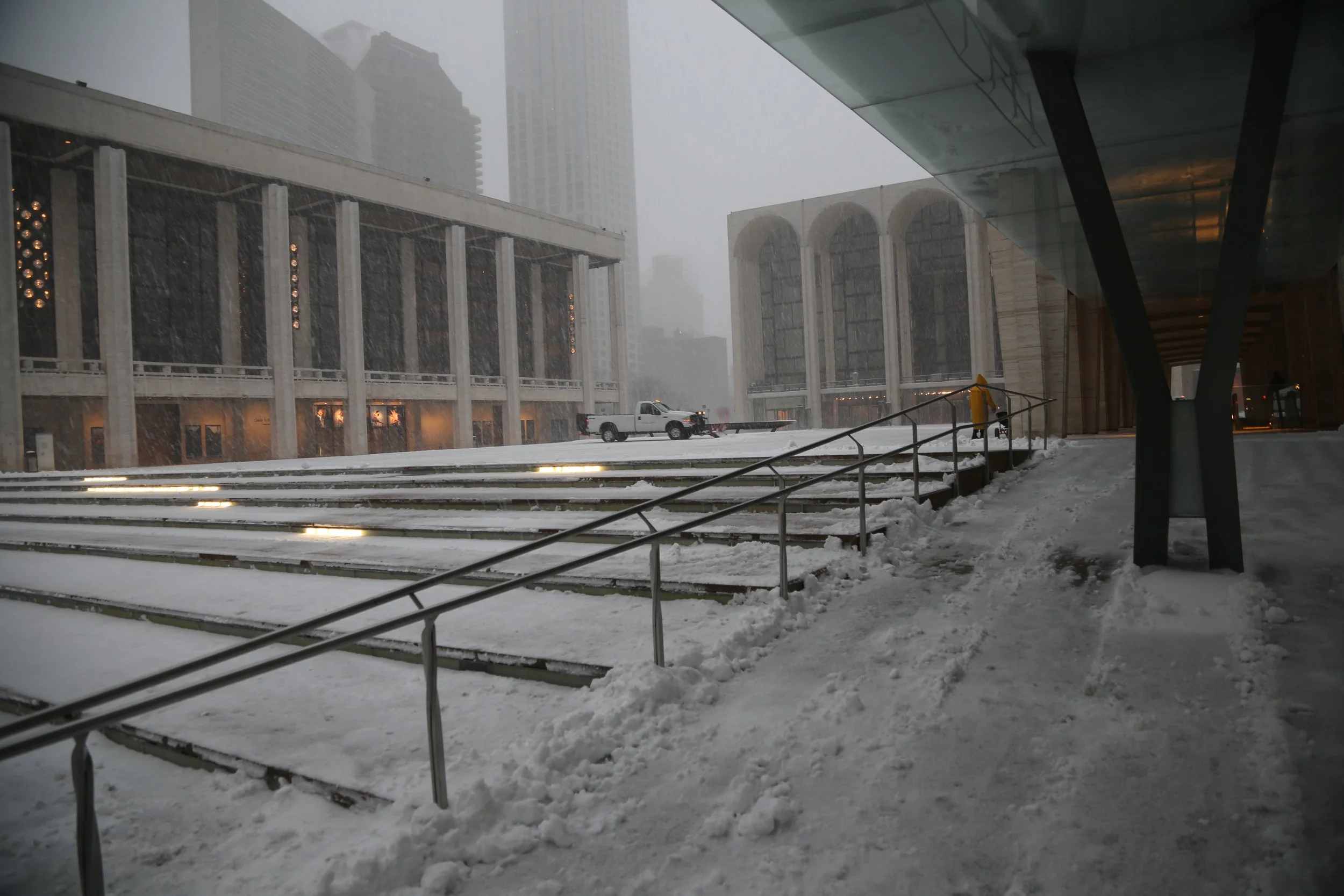
SNOW!
“it felt like hearing an air raid siren during the London Blitz.”
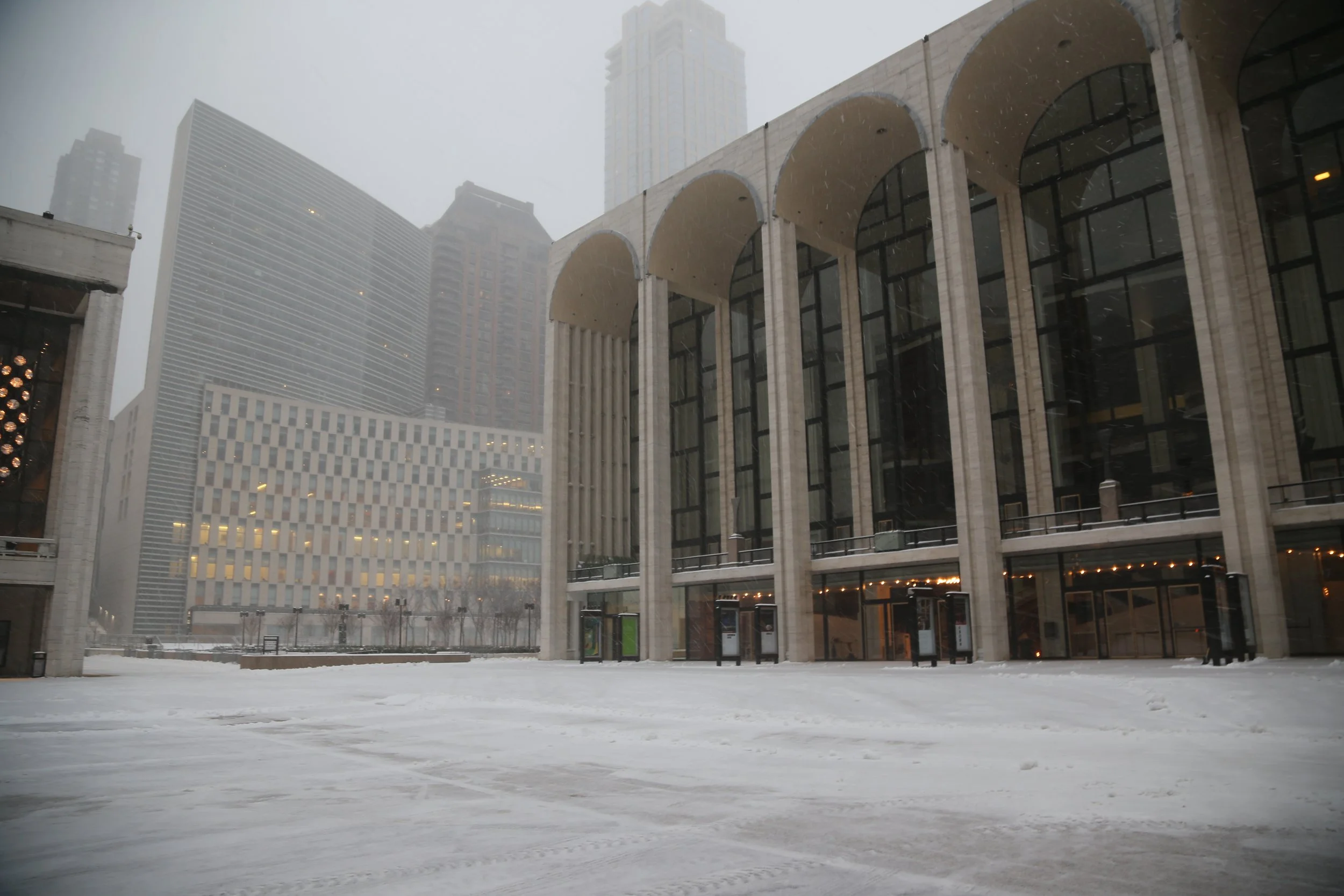
Lincoln Center Plaza - ‘Snowtime’
When snow was forecast at Lincoln Center, it felt like hearing an air raid siren during the London Blitz. The operations team would scramble into action, gathering in the conference room for a logistics meeting. Quantities of calcium chloride were checked, gas runs for the fleet of snow vehicles were designated, and petty cash was distributed for incidentals. A driving roster was drawn up, shifts were assigned, and calls were made to staff to confirm availability—all while monitoring the storm’s progress. Engineers were instructed to raise the temperature of the Reflecting Pool on the north plaza, where the cleared snow would be dumped to melt away. Rooms at the Empire Hotel were booked for team members that wouldn’t make it home.
The key message was: The Show Must Go On!
Staff without proper gear were given shovels, gloves, snow jackets, pants, and boots. The conference room transformed into a makeshift break room, with the onsite caterer keeping coffee urns piping hot. Lunch for 50 people was pre-ordered but with snowstorms snarling deliveries, we had to pick it up ourselves. Three of us loaded the truck to haul forty bags of food—a task I’d done myself, and it wasn’t fun. Navigating snow mounds, we hauled hot bags of food from the restaurant to the truck, stuffing them into garbage liners and covering them with plastic tarps to keep them dry.
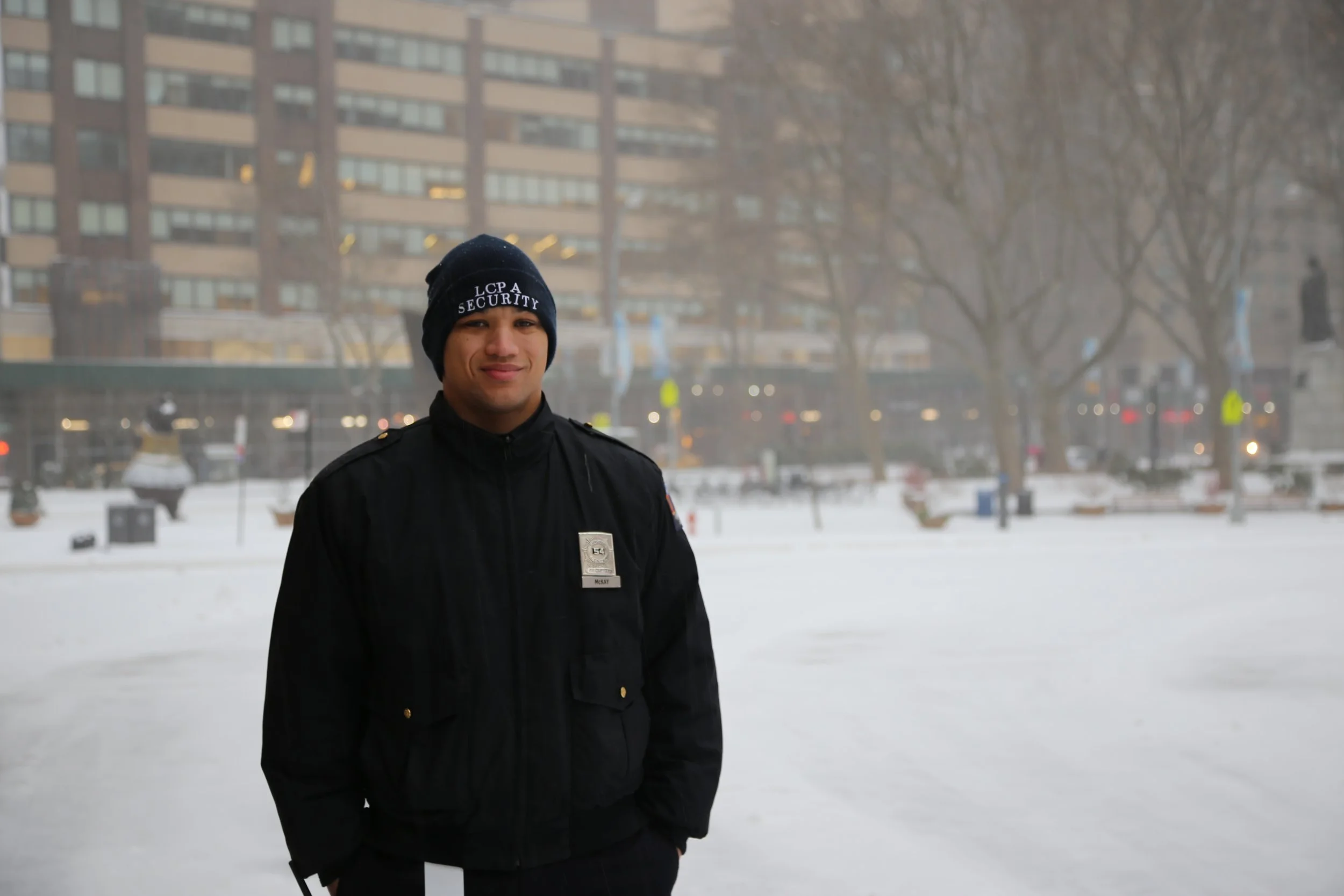
Officer Mckay
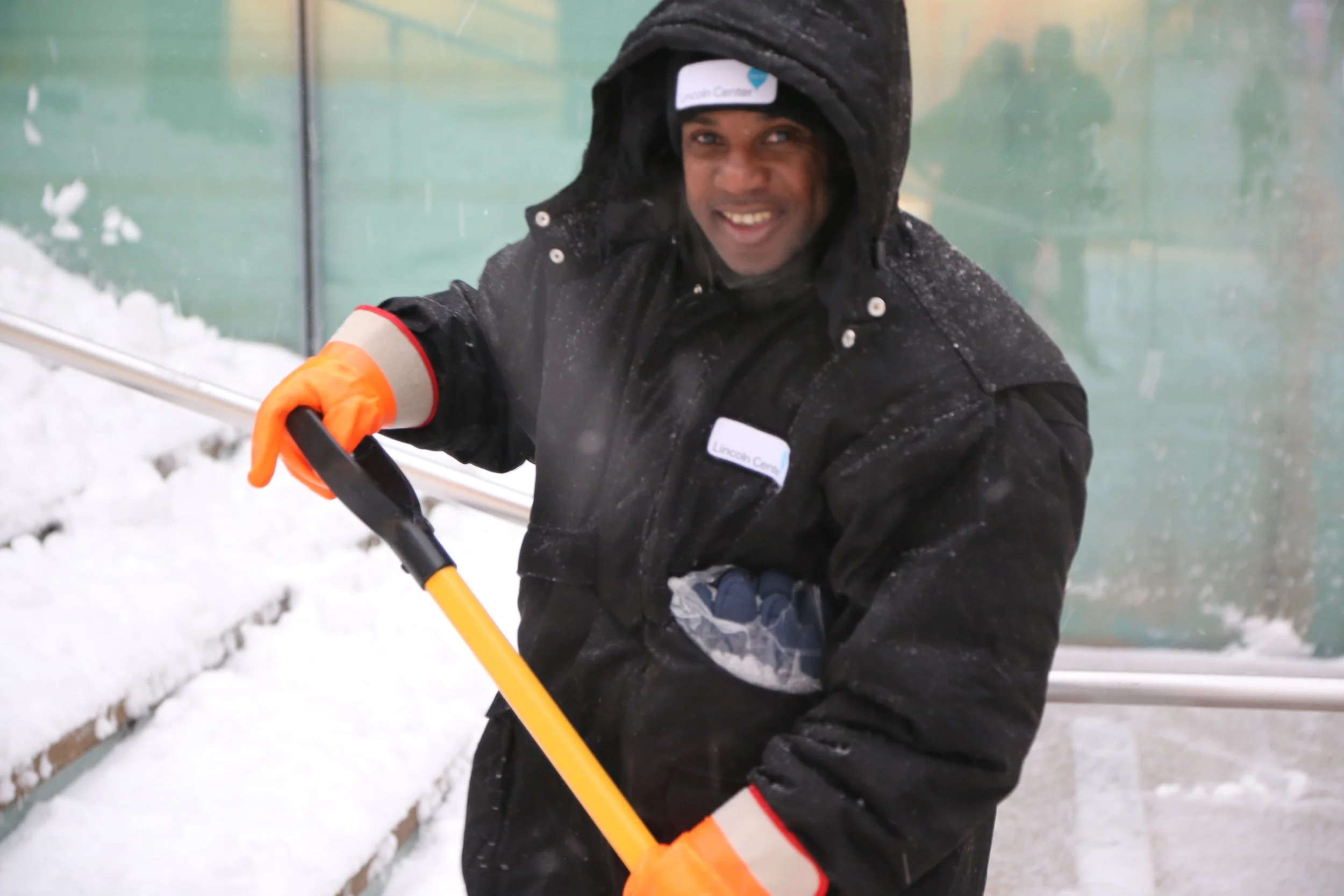
Mattis
After twelve hours in the elements, the team favored a hot meal from La Caridad 78 on Broadway. A steaming plate of yellow rice, red beans, ropa vieja, with sides of chicharrones and plantains, always got a thumbs up before they headed back into the storm.

Alvin and Walters
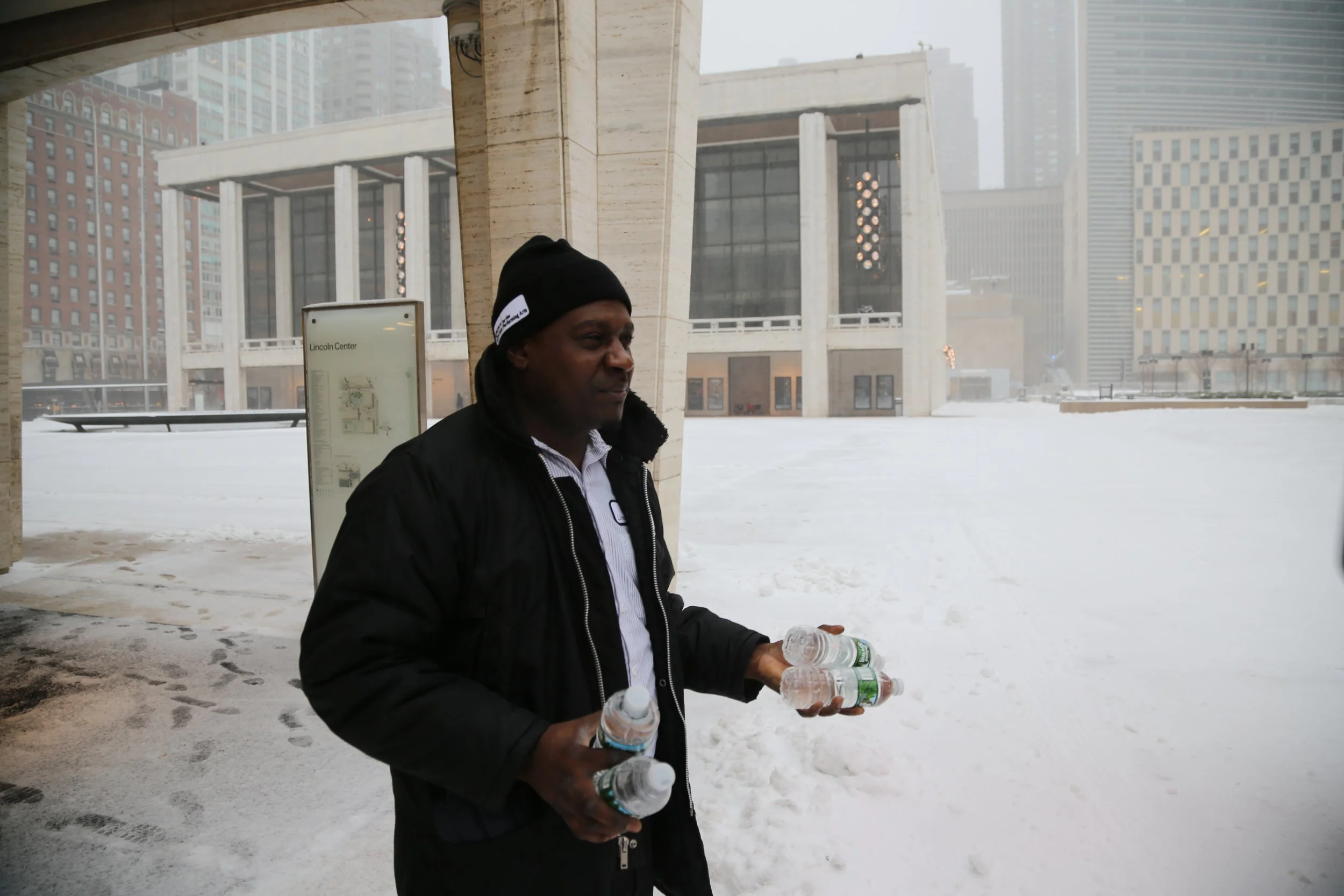
Brown
Harry, AKA Captain Bligh

Harry
Harry began as a porter at the David Koch Theater before moving to Lincoln Center in 2000, eventually becoming Director of Facilities and Maintenance. A proud Moroccan from Tangier and father of two daughters, he had a fierce love of football—we’ve watched many World Cup and Champions League games together. While he still passionately supports Spain and Morocco, I root for England. He’s a die-hard Real Madrid fan; I favor Barcelona, which leads to fun banter.
Before I worked at Lincoln Center, snow in New York was a bone-chilling, wet ordeal for me. Harry noticed my lack of proper gear and took it upon himself to order me a Helly Hansen suit—waterproof pants and a double-insulated jacket with a removable lining. It was a revelation, as were the double-stitched, fur-lined waterproof boots he provided. From that point on, I was never cold or wet again during a snowstorm.

On the Plaza
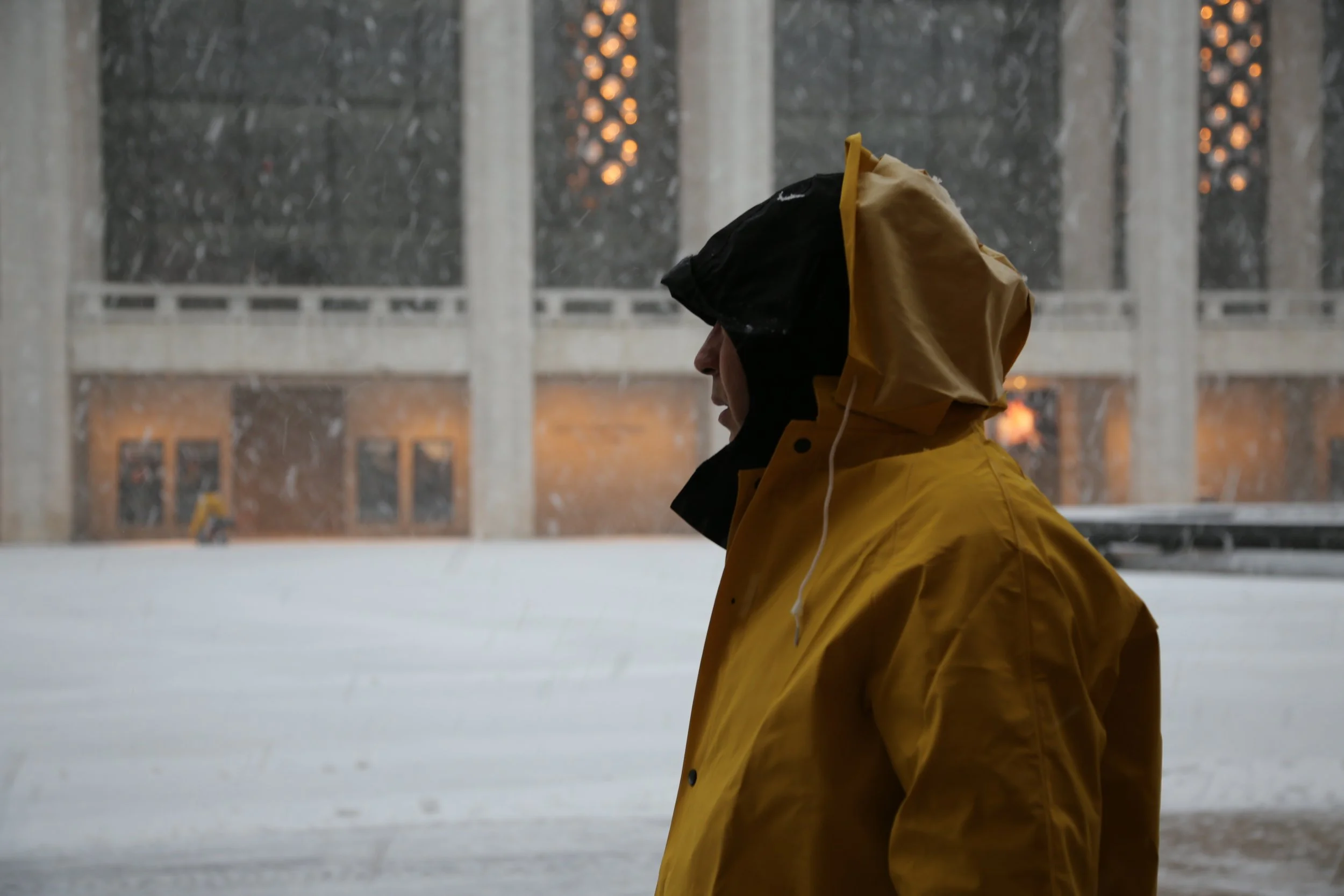
Reading the Landscape
When it snowed, Harry became Captain Bligh on the HMS Bounty, striding across the plaza in his yellow sou'wester and barking commands like he was rounding Cape Horn. He was relentless. After particularly tough phone calls, he'd glance at me over his glasses and ask:
“Roger, tell me something. Am I the crazy one?”
NOTE: One of the most crucial tools was the humble bucket opener. With dozens of pails needing to be opened to supply salt to the spreaders, I often found the team struggling to pry off the stubborn plastic rims with their bare hands, as if trying to crack a safe in the middle of a blizzard. When I asked why they weren’t using a proper opener, they shrugged and said they couldn’t find one. Determined to solve the problem, I bought a box of pail openers, tagged them like prized possessions, and only handed them out only on snow days, keeping a log. Yet during the next storm, I still found team members stubbornly battling the pails with their bare hands, as if the openers were some kind of forbidden technology.
Matthew
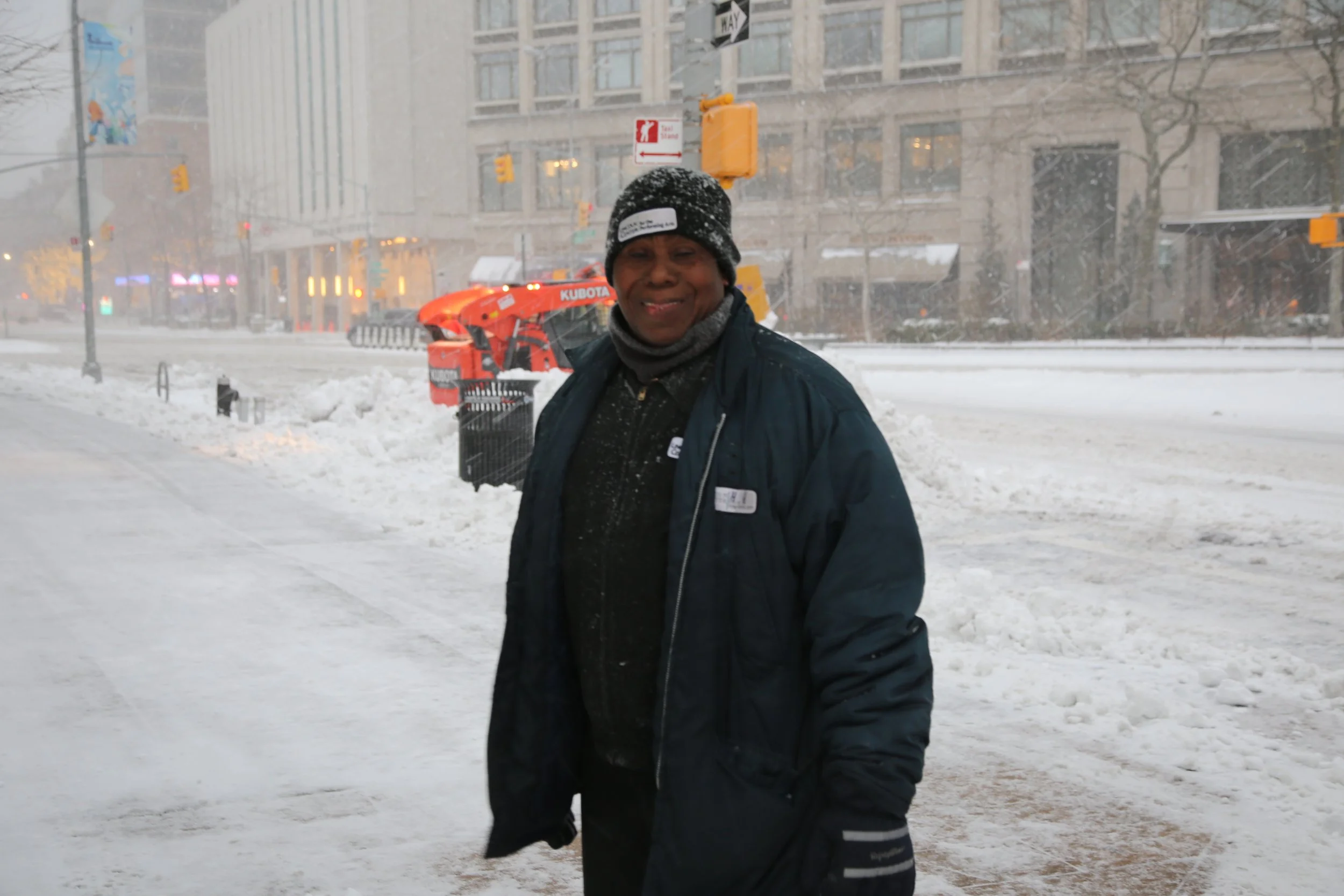
Matthew - Happy at Work
Matthew would stand nodding slowly under swirling snowflakes, absorbing the work orders I read out, his brow furrowed in concentration. You could almost hear his brain whirring, processing the information while his eyes remained fixed on the ground.
As plaza supervisor of the day crew at Lincoln Center, Matthew had a challenging role. The snow-covered plaza required his keen oversight of daily routines and special tasks. He tirelessly pursued team members who vanished on unofficial breaks, keeping operations running smoothly amid the winter chaos. Though he scowled when the workload grew heavy, Matthew consistently stepped in, embodying the resilience and leadership needed to maintain order on the plaza.
Santos

Santos in the Kubota
Santos was a stout, lively Dominican porter with a purposeful stride. Known for his sharp execution and confident handling of any task, he commanded respect. His bashful smile often surfaced while searching for the right English words—a charming contrast to his determined demeanor.
Behind the wheel of the Kubota snow pusher, Santos was a force of nature, maneuvering through the plaza with choreographed chaos. When the snow melted, he zipped around campus in his Cushman cart, delivering everything from barricades to planters.

Santos loved his homeland and frequently vacationed in Santo Domingo to reconnect with his roots. Whether moving snow or delivering chairs, he brought spirited dedication to every task—a true testament to his work ethic and pride.
Orlando
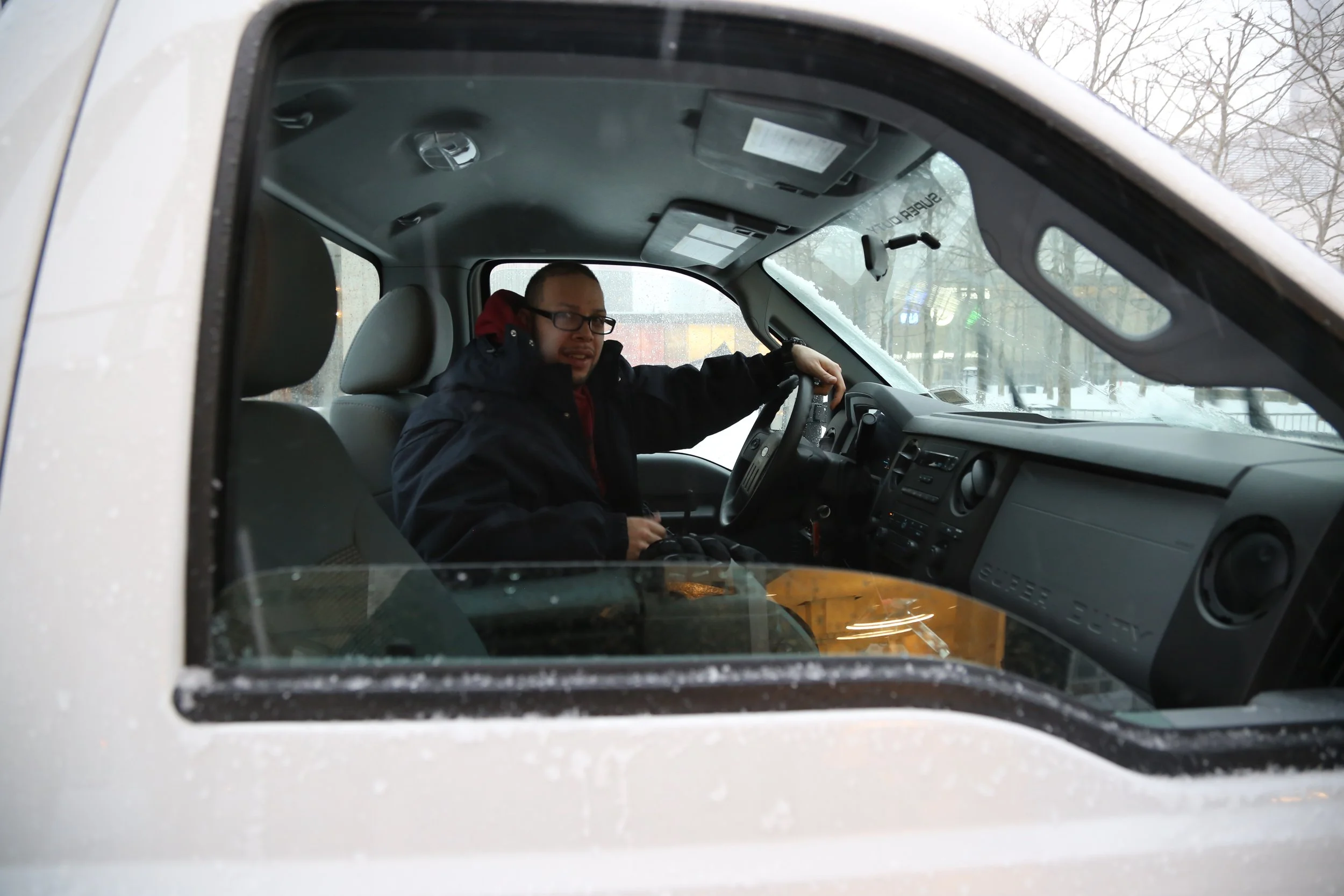
Orlando at the Wheel
Orlando, a Puerto Rican from the Bronx, was the day supervisor of the Rose Building, known for his loud and clear communication style that instantly created a strong rapport with his crew. With a commanding presence, he oversaw the cleaning and janitorial requests for the prestigious School of American Ballet and the Juilliard School dorms—spanning the 14th to 29th floors—along with all six floors serving esteemed constituents like the New York City Ballet, Chamber Music, Film Society, Metropolitan Opera, and the bustling ninth-floor offices of Lincoln Center.

When winter blanketed the campus, Orlando took the wheel of the snowplow and tirelessly kept the plaza accessible for his team. He earned a well-deserved promotion to the Facilities Management Department, a testament to his impressive growth and expanding responsibilities.
Saunders AKA “DMX”
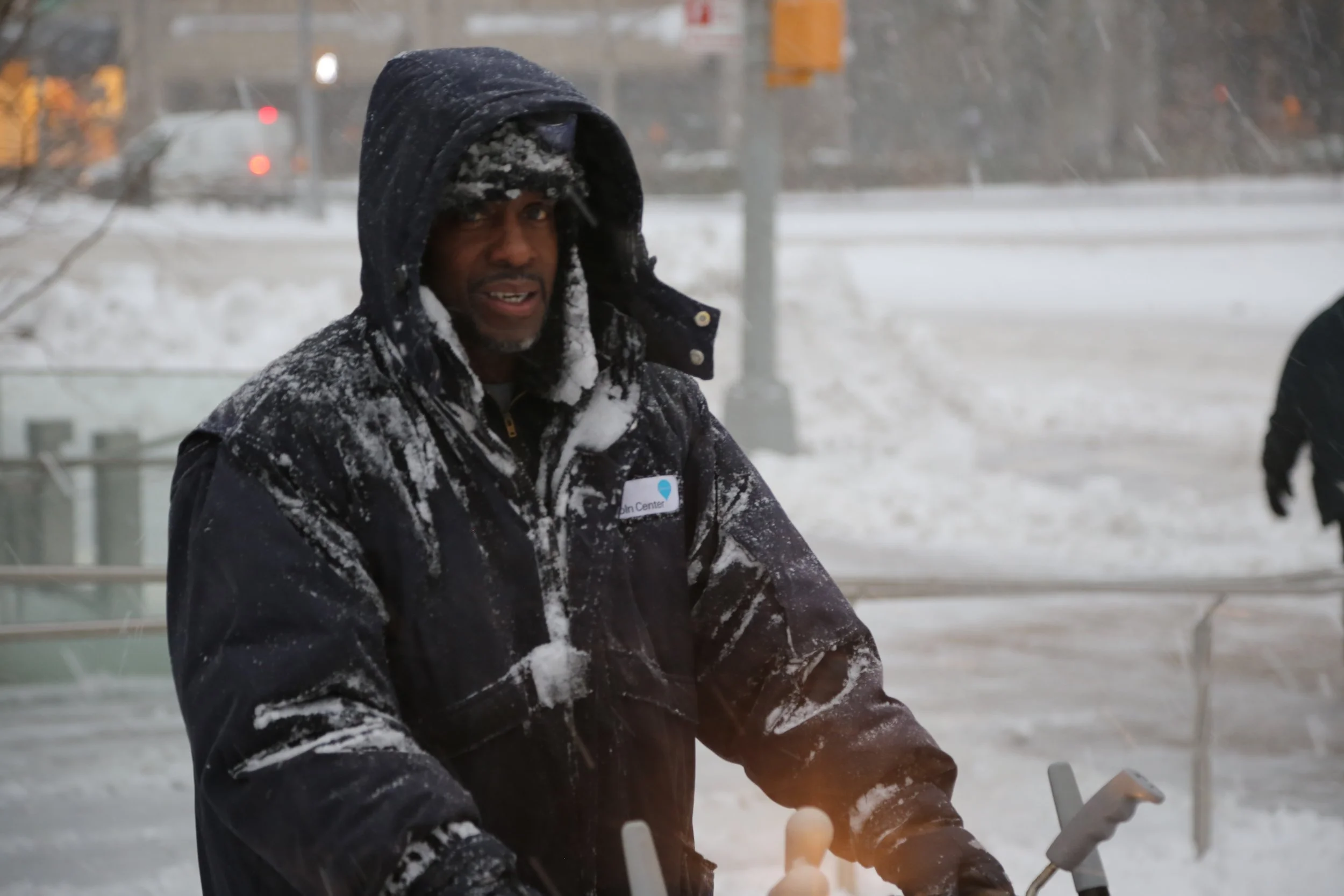
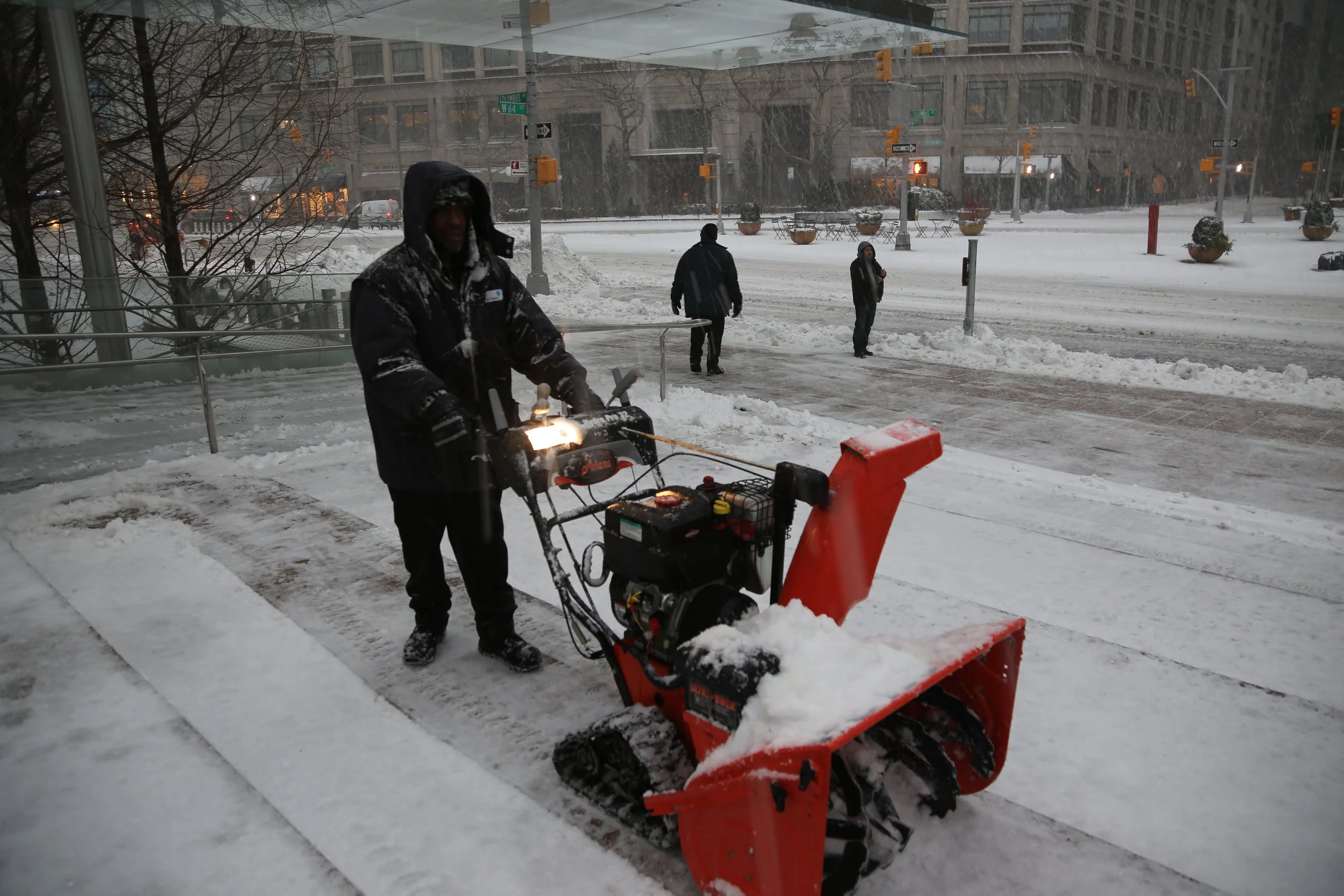
Saunders on the Grand Stairs
The crew affectionately dubbed Saunders "DMX" because of his resemblance to the famed rapper. On snowy days, when Lincoln Center transformed into a winter wonderland, Saunders undertook the formidable task of clearing the Grand Stairs—a monumental challenge consisting of seven broad steps, each five feet wide and stretching nearly the length of a city block. This seemingly never-ending effort required not only physical strength but also a stoic resilience.
As showtime approached on those frigid days, the plaza became a scene of beauty and chaos. Patrons in evening attire slid and stumbled past the Revson fountain, eager to secure their coveted seats. Amid this whirlwind, Saunders remained a steadfast figure, ensuring the Grand Stairs were as safe as possible, all while maintaining a light-hearted spirit.

During the harsh blizzard of 2016, a frail octogenarian bundled in elegant winter attire emerged from a limousine at the foot of the steps. Recognizing that the snow was too treacherous for him, a team member sprang into action, rallying porters, including Saunders. With care, they carried the gentleman across the plaza, impressing the crowds, and set him down at the Metropolitan Opera entrance.
"I didn't want to miss the show," the grateful man said.
As he entered the opera house, he waved his thanks while the team shared a proud moment of camaraderie over their act of kindness.
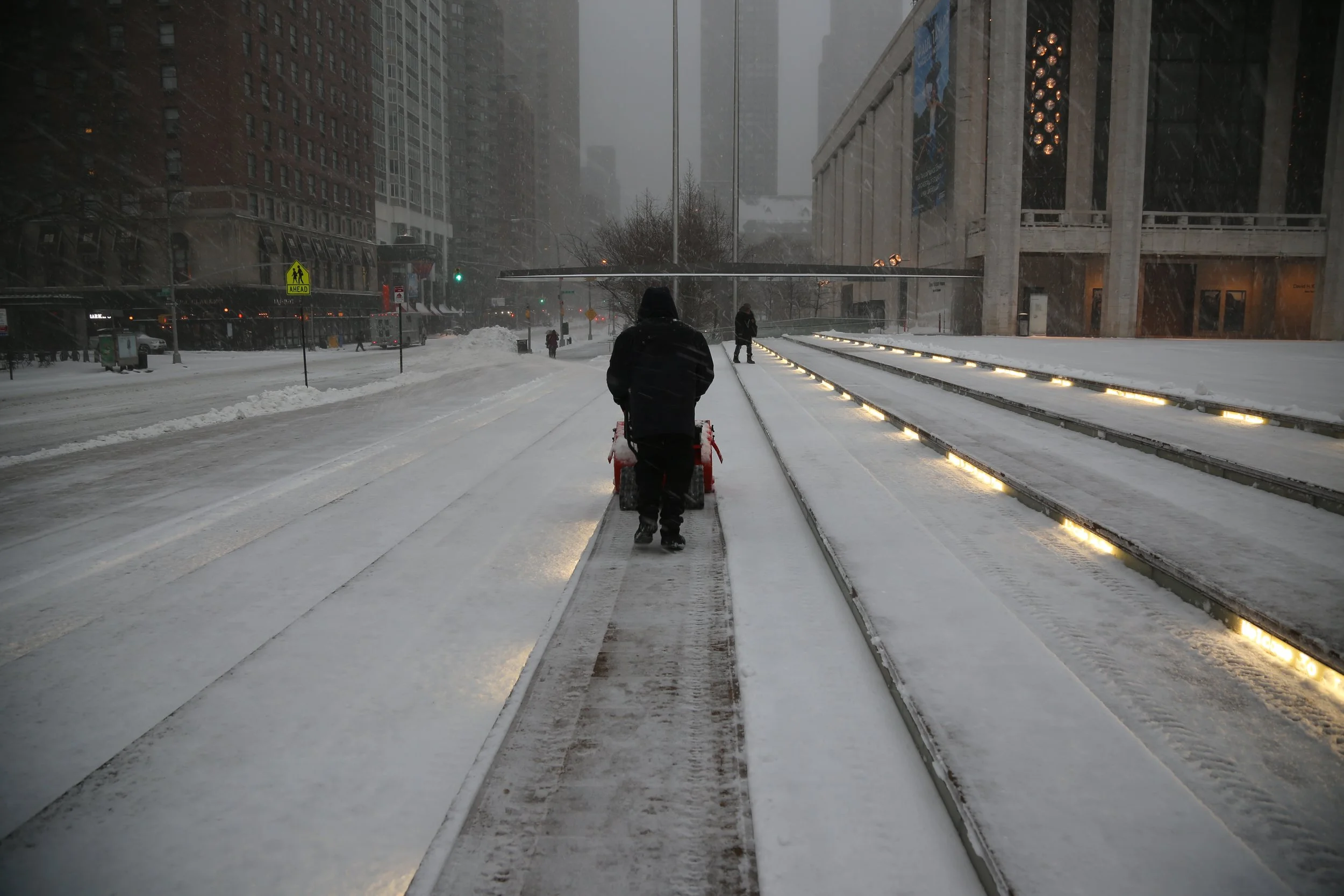
Saunders at Work
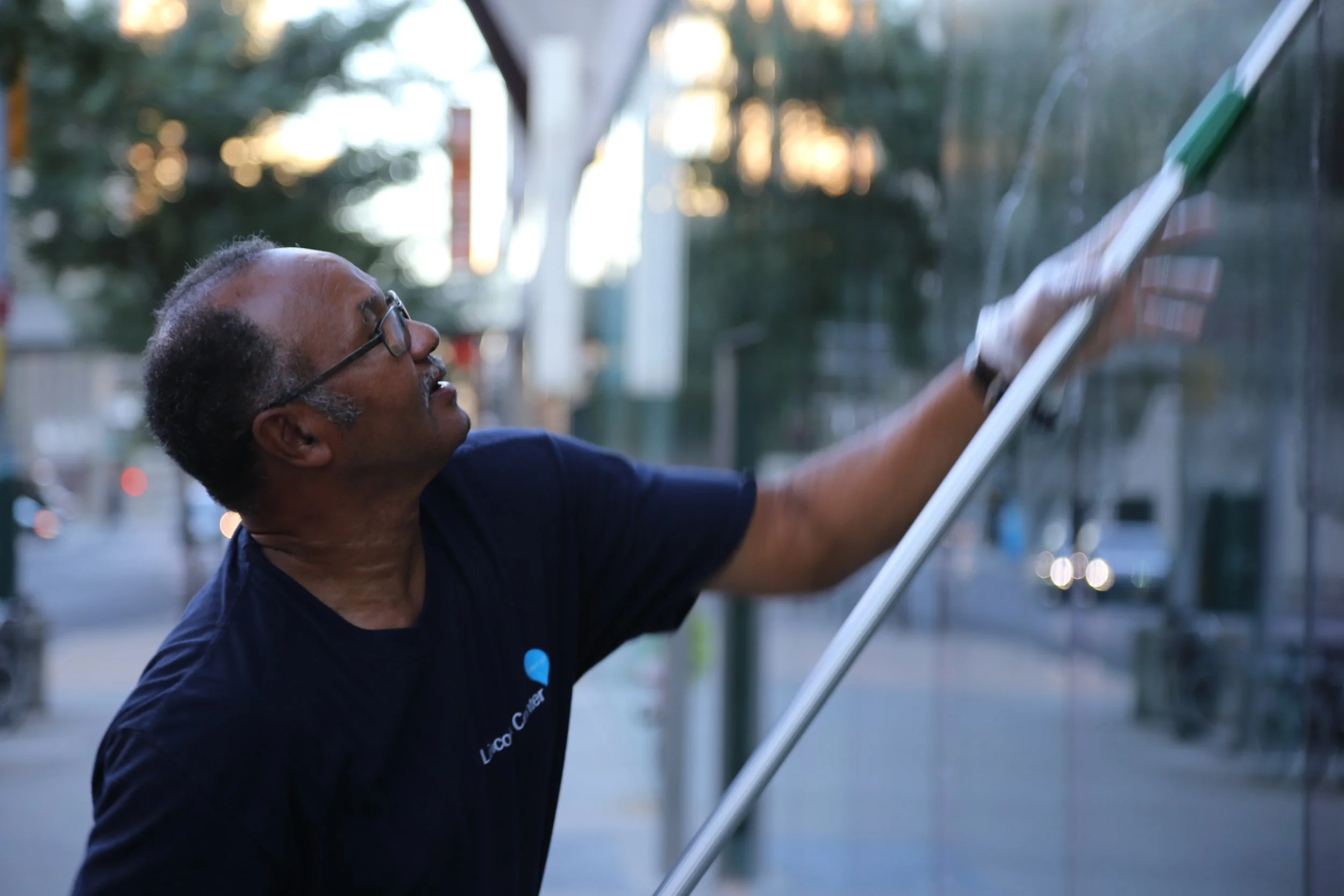
Frank, the Window Cleaner and Timmy
“I left some of the best blackfish I ever caught in your fridge this morning.”
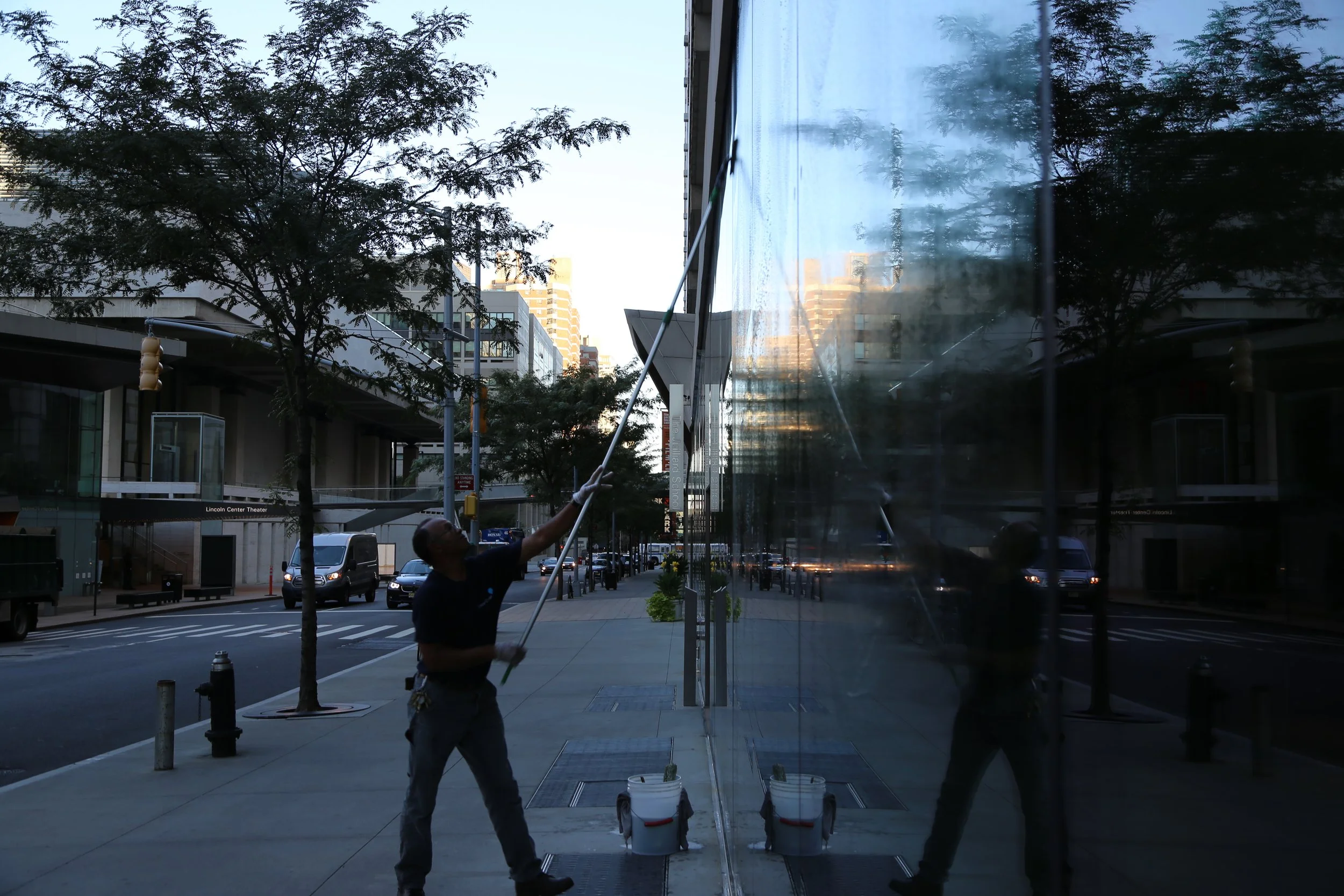
Frank - Dawn on 65th Street.
Every weekday morning, Frank, the Window Cleaner, could be spotted around Lincoln Center, his silhouette cutting a distinct figure against the soft dawn light. With his bucket, ladder, and cleaning pole, he moved swiftly across campus with a loping stride.
There was something about his learned schoolteacher appearance and raspy city accent that drew me to him. But what really won me over was his habit of leaving freshly caught fish in my fridge before I even got to work.
One morning, I heard Frank calling my name from across the street. He was waving, a broad grin on his face:
“That blackfish is like sushi!” he hollered.
“What blackfish?” I replied, confused.
Still laughing, he crossed the street and said:
“I left some of the best blackfish I ever caught in your fridge this morning. You were probably still asleep! Those fish like to hide under rocks. You need a lot of patience to find them. Oh boy, they’re sweet. Make tacos! You’ll love them.”
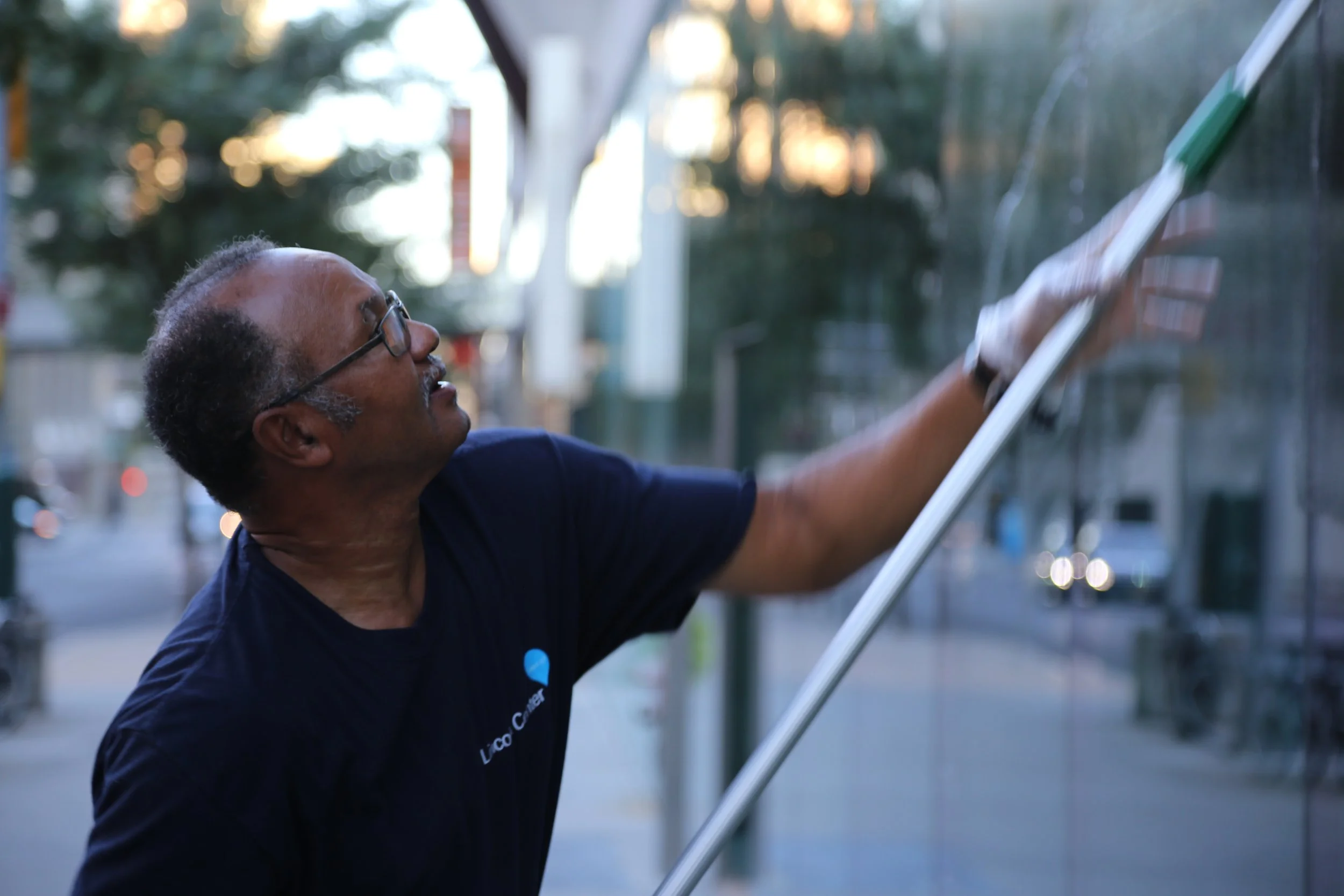
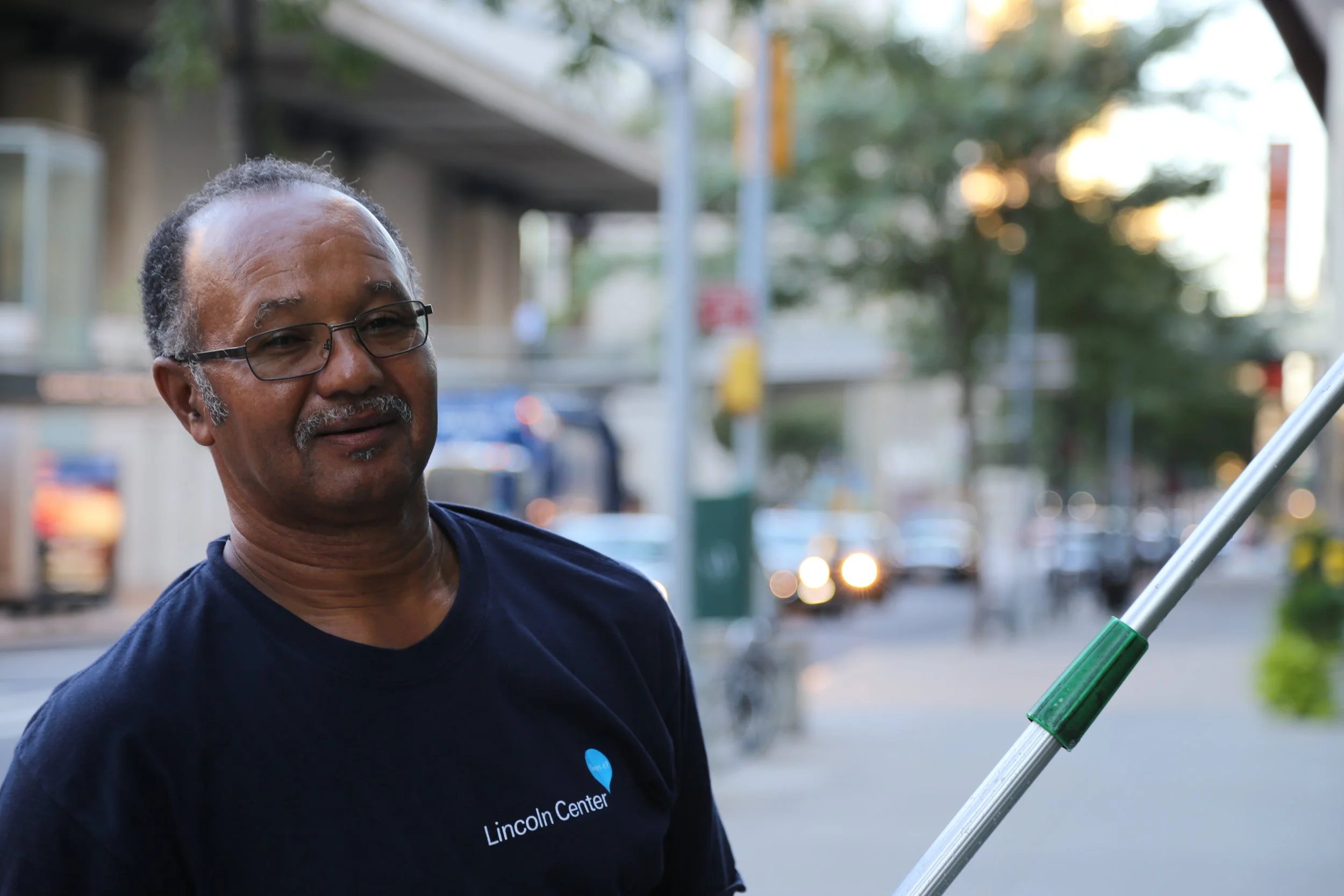
Frank was incredibly generous. He’d be out on his boat off Long Island Sound at 3 a.m., catching, cleaning, gutting, and fileting fish before sunrise. When I arrived at work, I’d find two ziplock bags full of pristine fish waiting for me. I was lucky enough to try his striped bass, fluke, porgy, and of course, blackfish. And Frank was right; the blackfish made the sweetest tacos I’ve ever had.
Timmy
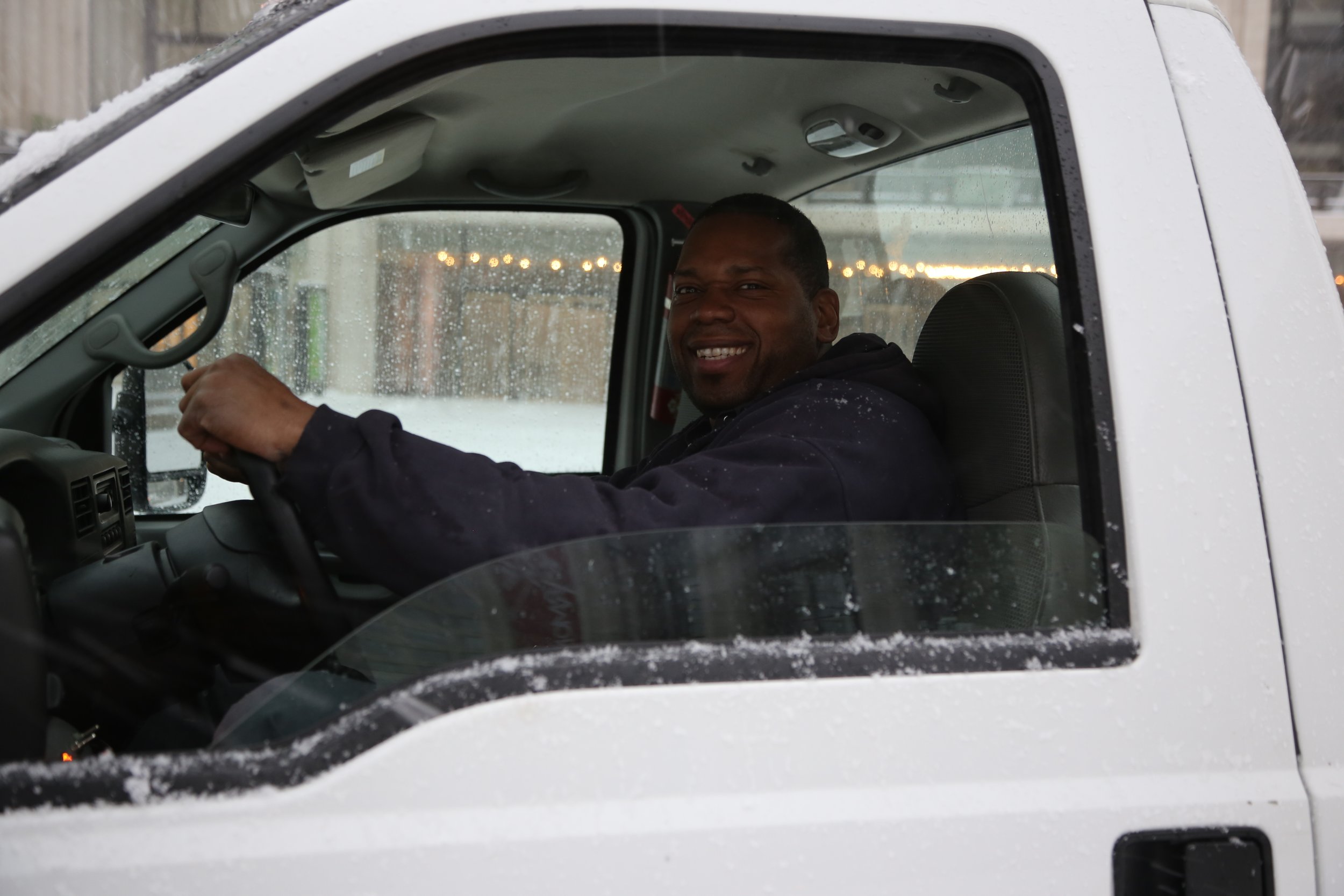
Timmy on the Plaza
Tim, affectionately known as Timmy, was Lincoln Center’s go-to handyman/plumber. A gentle giant and popular figure around campus, Timmy cruised around in his electric cart, which was stacked with bags of cement, a wet vacuum, slabs of paving stones, tiles, buckets, a blowtorch, and copper pipes. Whether it was fixing an uneven paving stone on the plaza or unclogging a storm drain choked with fall leaves, Timmy was the one who got it done.
Timmy had a bit of Southern charm to his voice and manner. Around Thanksgiving, he was always eager to share tips about how to deep fry an entire turkey. Each time I called him, he answered the phone with his signature greeting:
“Whayou saying Rahdge?”
Timmy’s handiwork wasn’t just limited to Lincoln Center—he has been to my house numerous times, installed new faucets in my bathroom, fixed a leak from the washing machine, replaced the pipe under the kitchen sink, and even repaired the igniter on my gas stove. I’m extremely impatient so I was amazed at his willingness to tinker and figure things out with the help of the internet. I remember being on the verge of telling him to give up on my washing machine until, with a little help from YouTube, he got it working again.
My landlord, Bill, who lives above my apartment in Harlem, also called him Timmy. Bill, being an architect, once asked Timmy to break down a bathroom wall to fix an ancient German faucet rather than upgrade it to a simpler Home Depot fixture. The job took four days and required Timmy to coordinate with me in the basement where the water mains were located.
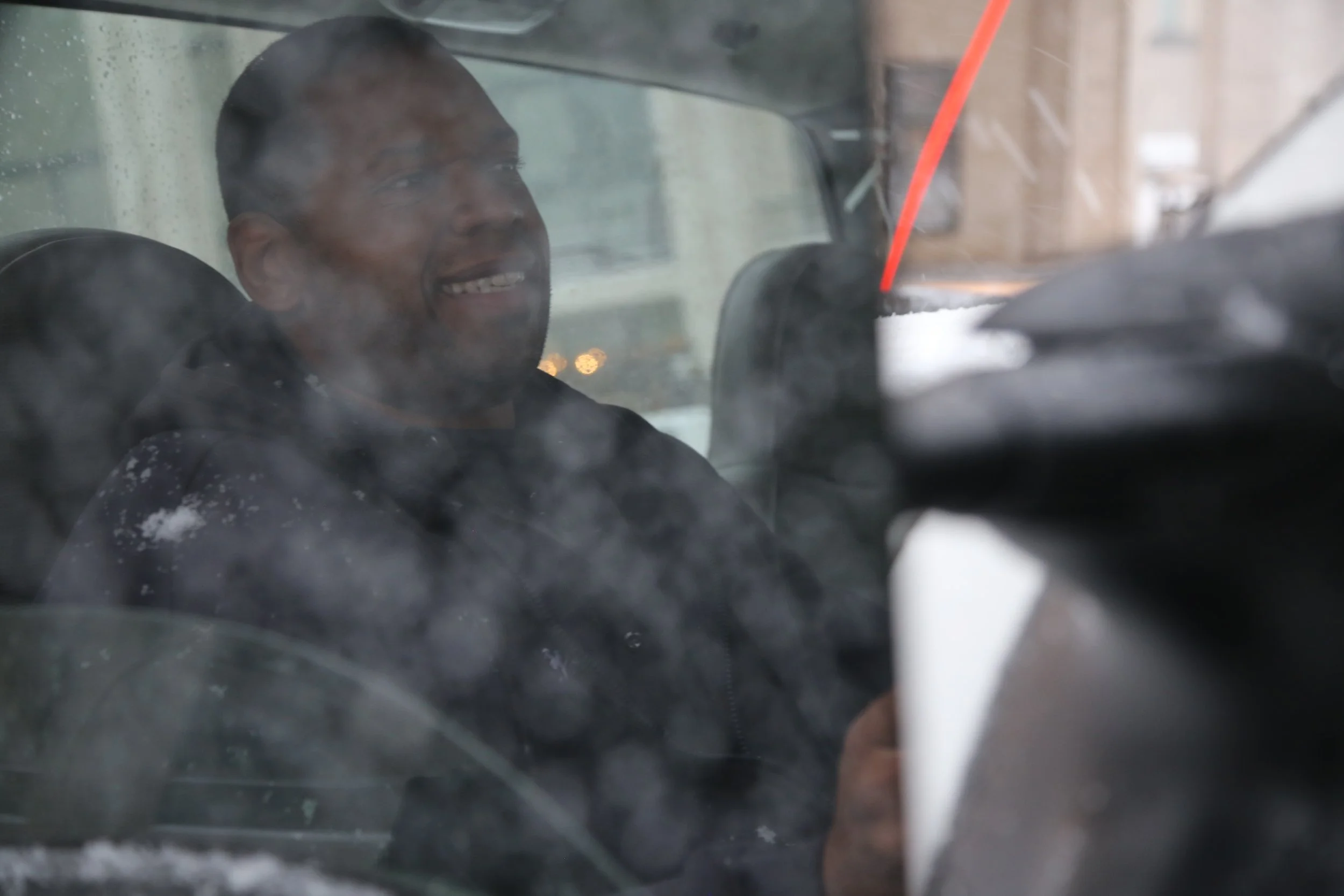
While Timmy was working upstairs, my wife and I were busy in the kitchen, making steak and ale pies. She handled the crust, I prepared the filling. Timmy had been at it all day so we invited him to join us for dinner. He politely declined, preferring to buy some materials, so I sent him off with a freshly baked pie for the road. About 20 minutes later, I got a call from him. He was stuck in traffic, pie in hand, and asked if my wife was nearby. When I put him on speaker, he said:
“This pie is amazing. The crust is so, so buddery! I started eating it, and the lady bus driver beside me said, ‘Whatchu eating, Sweetie? You look happy!’ I told her, ‘My friend and his wife just made the best steak pie with the budderiest crust I ever tasted.’ She even wanted some!”
We all laughed, delighted at how much Timmy had enjoyed the buttery pie—and at his unique dining experience.
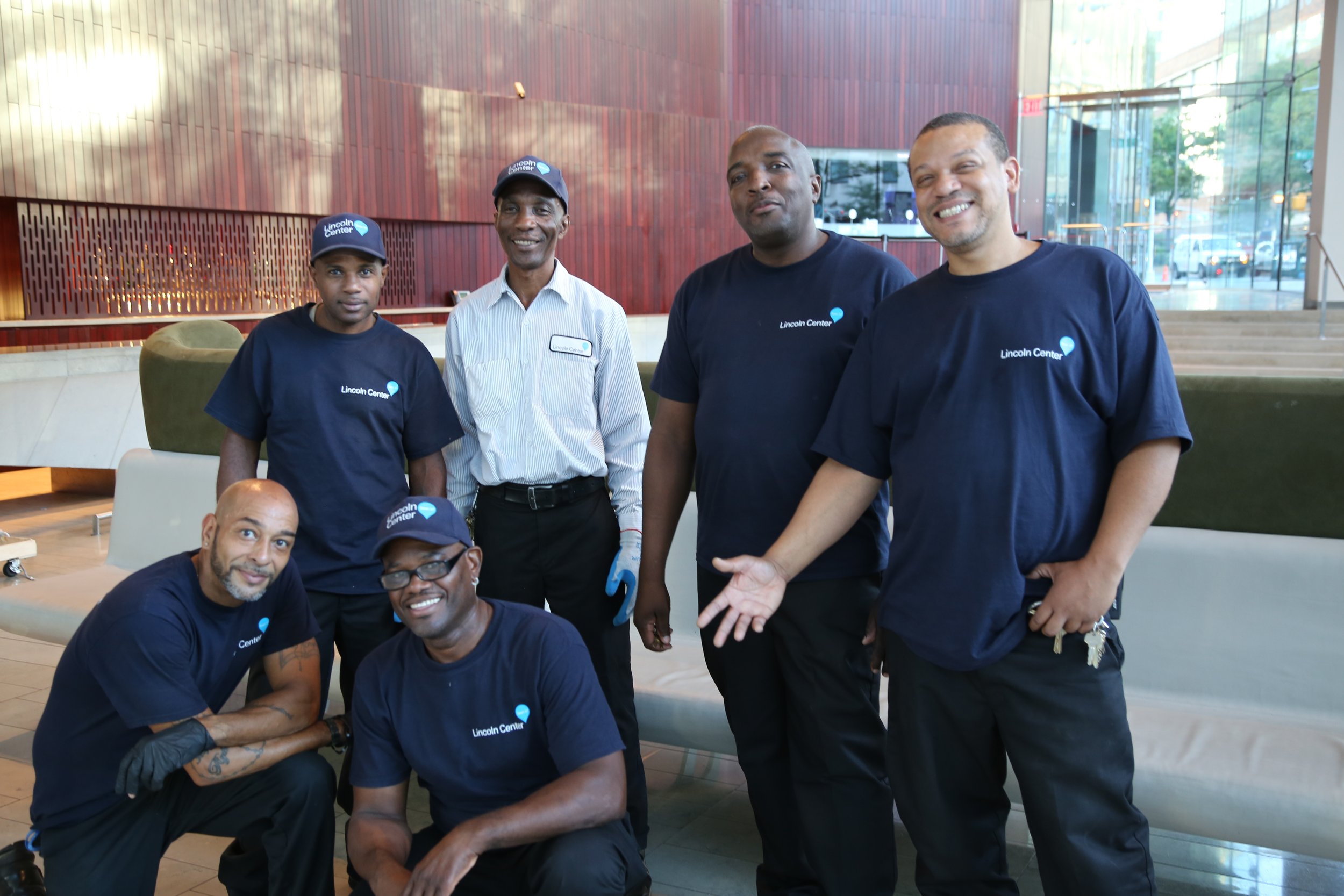
The Porters
“You want to take a picture with us?”
Lincoln Center porters operated across three shifts—morning, afternoon, and overnight—each overseen by a supervisor who managed the routines and implemented work orders in three key areas:
Concert Halls: David Geffen Hall, Alice Tully Hall, Lincoln Center Theater, Walter Reade Theater, David Rubenstein Atrium, and Elinor Bunin Munroe Film Center.
Rose Building: Seven floors of administrative offices and dance studios, four floors of dormitories for the School of American Ballet, and twelve floors of dormitories and residences for The Juilliard School.
Plaza: Damrosch Park, Josie Robertson Plaza, Barclays Grove, Hearst Plaza, Illumination Lawn, the block of 65th Street between Amsterdam and Broadway, Columbus Avenue between 62nd and 66th Streets, 66th Street South from Broadway to The Juilliard School, and five underground parking garages coded by color—red, green, yellow, black, and blue.
In these areas, porters set up and struck outdoor seating, emptied garbage cans, buffed poster cases, operated ride-on sweepers, cleaned and polished offices, lounges, and kitchens, vacuumed and shampooed theaters, polished lobby terrazzo, scrubbed and disinfected bathrooms, handled load-ins and load-outs for special events, and donned black attire to fade into the background while servicing VIP premieres.
The most dreaded task? Fixing a clogged toilet that had become a health hazard. Engineers and plumbers tackled the dirty work, while front-of-house staff held their noses and stood a safe distance away, anxiously watching the clock. Once the clog was cleared, porters armed with buckets, wet vacuums, disinfectant, and air freshener swooped in to clean up the aftermath.
Porters were often called upon for emergency tasks, usually requested at the last minute by panicked constituents who’d overlooked something crucial for an event. Their expectation? That the operations team would drop everything to accommodate their request. As one of my colleagues often said, “Your emergency is not my emergency,” a mantra he frequently cited during tense phone calls. When emergencies did arise, our teams were already knee-deep in scheduled tasks but we always did our best to meet the constituents' needs, skillfully maneuvering the teams to assist. The porters and trades understood the importance of last-minute requests, and their ability to adapt and overcome these challenges only increased their value.
Group Picture
One morning, I strolled into Alice Tully Hall to find the crew in the midst of a large furniture move. I spotted Louis, the supervisor, orchestrating the scene like a maestro guiding his symphony. I was in the habit of taking my camera with me around campus so an idea struck me: I wanted to capture this moment, this team, in a photograph.
“Louis,” I called out, “how about we take a group picture?”
He turned to me with concern. Taking a picture of mere porters was not an everyday occurrence. He pulled me aside, his voice tinged with worry.
“Excuse me, Mister Roger. I’m confused. You want to take a picture with us? What is this for?”
I could see the uncertainty in his eyes, as if he feared some kind of official compliance was at play. I quickly reassured him, explaining that I wanted to document the lives and contributions of Lincoln Center’s operations employees. My goal was to one day share the stories of these hidden champions, the people who keep the heart of Lincoln Center beating.
As I spoke, Louis’s expression softened, his concern melted away and a smile broke across his face. He loved the idea. Turning to the team, he explained my intentions with the enthusiasm of a man who had just discovered he was being celebrated. At first, there was a ripple of confusion among the crew, but it didn’t take long for delight to spread. Their faces lit up, and the team quickly arranged themselves for the photo.
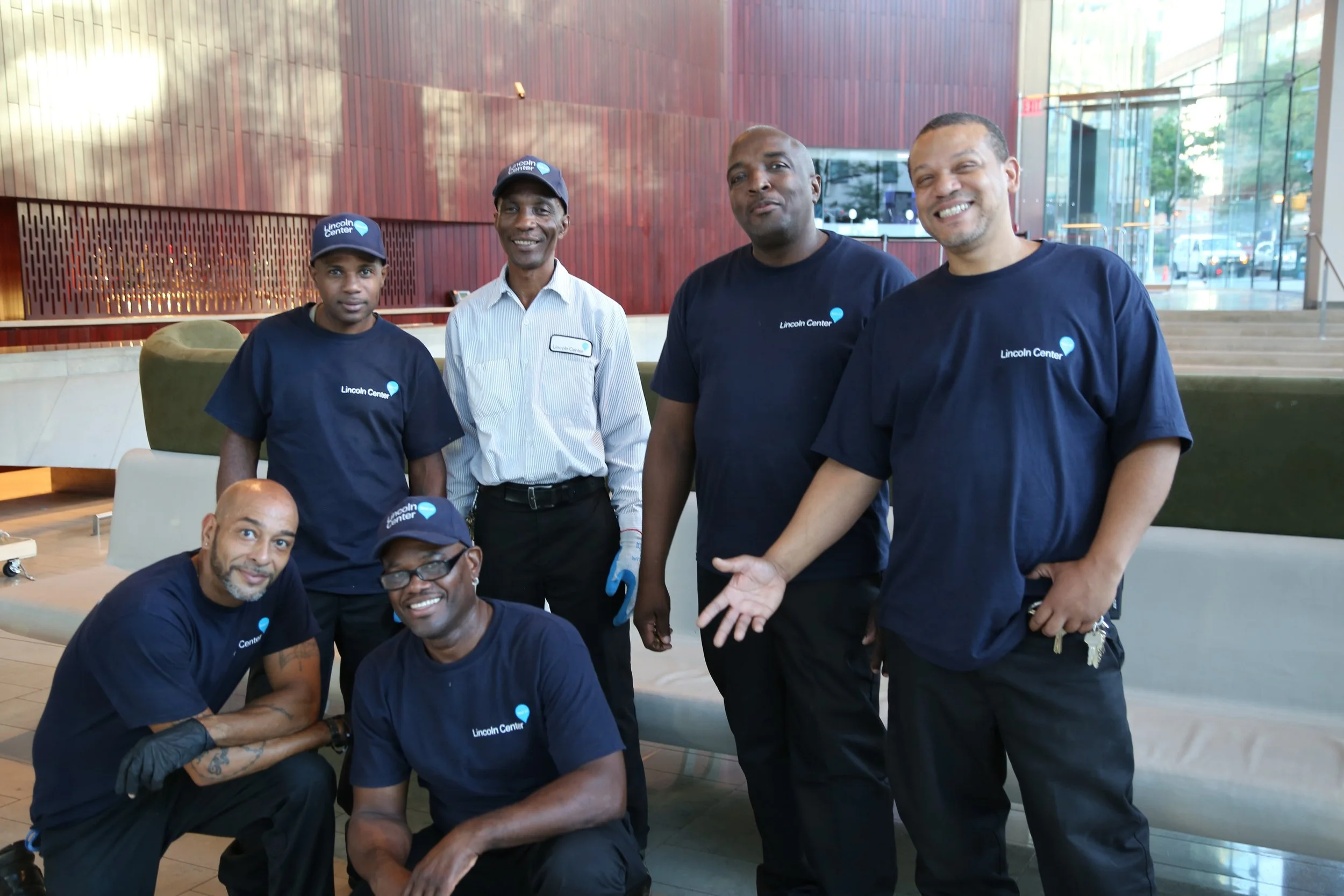
Left to Right - Mike, Mattis, Derek, Mister Whyne, Warlters and Louis.
I treasure this picture. It’s not just a photo; it’s a portrait of genuine joy, positivity, and character. Each person in the frame exudes a natural unity and pride. Alice Tully Hall’s lobby is a befitting frame for Louis’s wide smile and his outstretched hand, as if he’s inviting us all to acknowledge the true stars of this show—the first chair and principal sections of his own remarkable ensemble.
Mike (kneeling far left)
Mike was sharp, self-assured, and serious—a dependable worker. I met him during an office upgrade in David Geffen Hall, when we needed extra help to move some furniture. From the moment we shook hands, he maintained great eye contact, radiating an energy that clearly said, "You can count on me." And he delivered on that promise every time I needed him. If there were ever a special forces team of porters deployed during an apocalyptic snowstorm, Mike would be the lone survivor.
Mattis (standing top left) and Derek (kneeling right of Mike)
Mattis and Derek worked in the Concert Halls, embodying the qualities of diligent employees who listened and smiled but remained reticent, background players whenever I spoke with their supervisors. They exemplified the honorable yet cautious approach to their work—doing what was required without drawing attention to themselves.
In this picture, however, Mattis and Derek show their true characters.
Mister Whyne
Mister Whyne, the slim man in the white-striped shirt, was a quiet and cordial gentleman who worked in the Concert Halls. He carried himself with the gentle grace and uncommon poise of an English butler—always standing straight and speaking with a soft Jamaican accent. To management, Mister Whyne was as reliable as a Swiss watch. I knew that if I asked him to do anything, it wouldn’t just get done; it would be done properly.
When I joined the operations team in 2013, I noticed he was the only porter everyone called "Mister." Curious, I asked a colleague why. He simply shrugged and said:
“No idea, but when you look at Mister Whyne, he just looks like a Mister, right?”
Louis (far right) was the day crew supervisor in the halls. Charismatic and well-liked, Louis could brighten anyone's day. His popularity was clear when he was voted one of the most helpful and conscientious workers by his peers, earning an award and a hefty check. The cheers that filled the room as he accepted the honor were evidence of this high regard.
Louis’s smile radiated fun, friendship, and warmth. On tough days, if Louis showed up at your desk to help remove boxes or a stray chair, his presence wasn’t just a task completed—it was a welcome break, leaving you feeling lighter and at ease.
Walters (left of Louis) co-supervised the Hall’s crew with Louis. With a strong Jamaican accent and commanding presence, Walters was like an irksome grandparent—tough yet endearing—who held sway over the Lincoln Center West Indian community. Though demanding, he was always genial and polite. The dynamic between Walters and Louis was fascinating—they bickered like an old married couple but remained inseparable. No matter the day's disagreements, they were always side by side, even after hours.
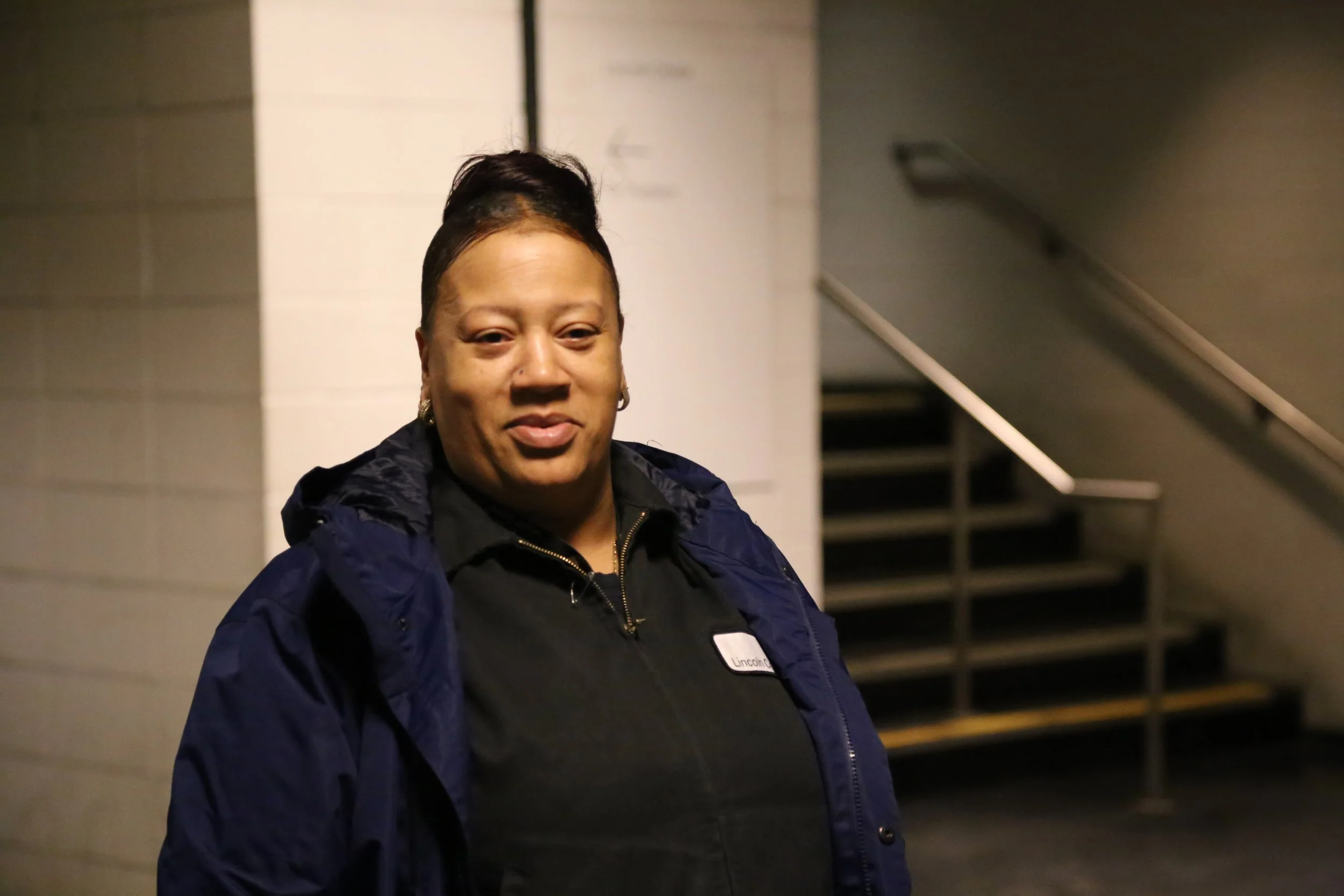
Robin
Robin, one of the only female plaza porters, hailed from the Bronx and commanded a strong presence. Her Bronx accent was as bold as her personality, laced with the colorful intonation that came from growing up in the projects. At first, I was a bit wary of her, unsure of what to make of her tough exterior. But that all changed when I saw her greet my boss with a soft kiss on the cheek before giving me a friendly wave. It was then that I realized Robin hid a soft side under that formidable exterior.
Robin's toughness was no myth. One night, when a disturbed man attacked a security guard in the underground concourse, Robin sprang into action. With an umbrella in hand, she wielded it like a nunchuck and chased off the attacker, leaving no doubt about her fearless spirit.
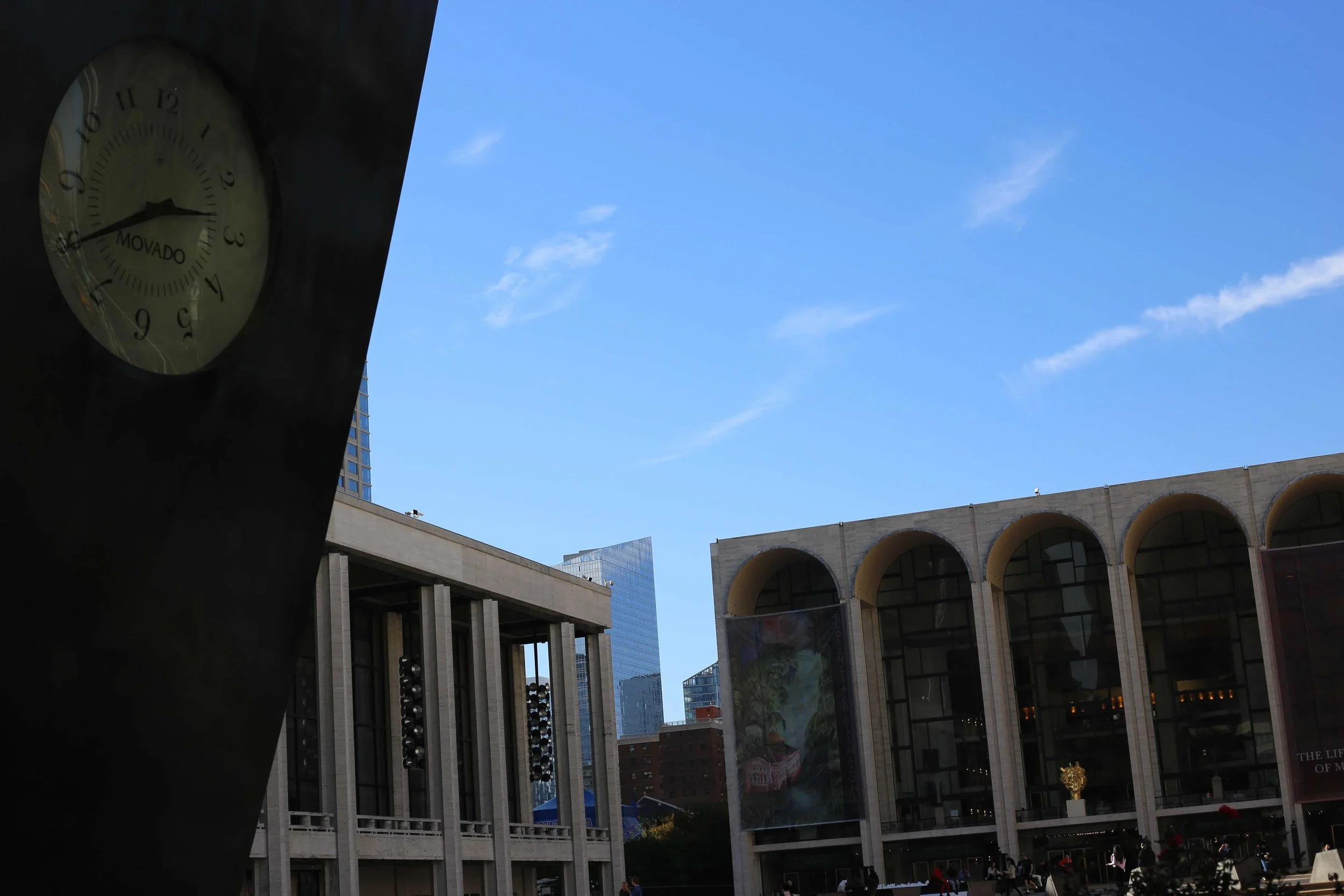
On the Clock at Lincoln Center
“These anonymous workers have never stood in the spotlight, received a round of applause, caught a bouquet of flowers…”
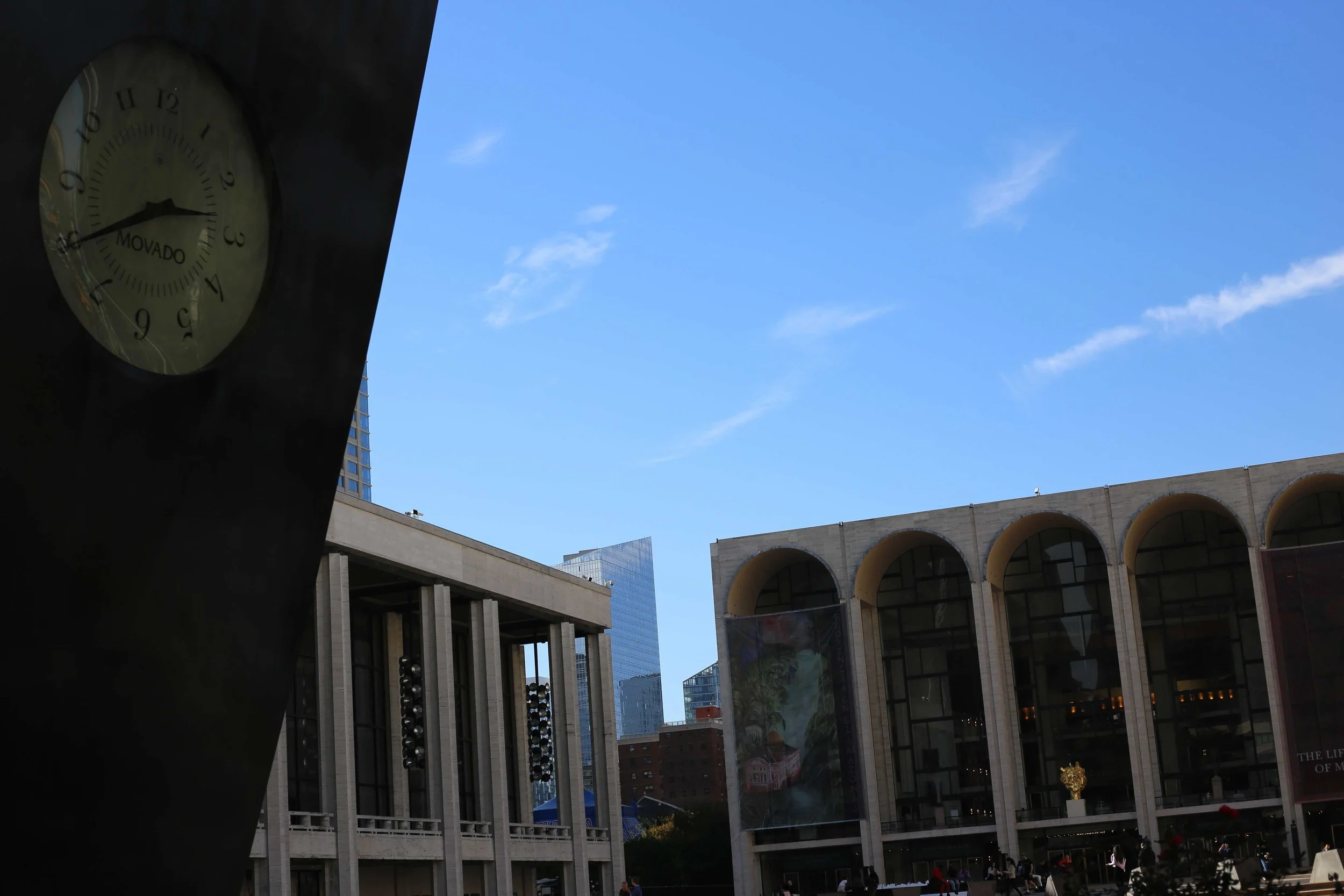
Movado Clock, Lincoln Center
This blog is a selection of my photos, anecdotes, and character sketches that portray some of the dedicated employees I was privileged to work with from 2010-2019.
As a manager, filmmaker, and storyteller, I felt it was my duty to document and dignify some of the people I came to know, their jobs, and their unique lives - On the Clock at Lincoln Center.
My Road to Lincoln Center
In May 2000, I left my home in London for a new home in New York City, driven by a dream to make a feature film that would launch my career as a writer and director. Drawn to stories of underdogs and unsung heroes, I wanted to be the voice of the unheard.
By July 2010, after working on countless independent films, I needed a job to cover my rent while fundraising for a feature film that I would direct. Lincoln Center suddenly came to mind, and on a whim, I checked their job openings. I found a position that seemed perfect: Facility Assistant/Visitor’s Service Representative, 20 hours a week. I applied on a Monday and to my surprise received a call the very next day—Lincoln Center wanted to interview me.
In August 2010, I began working at Lincoln Center for the Performing Arts. What started as a part-time job quickly evolved. Over the next nine years, I moved through various roles: Facility Manager, Senior Manager of Operations & Facility Services, and Assistant Director of Operations & Facilities. By December 2019, I became the Director of Facilities, Operations at The Juilliard School, a premier performing arts academy and a Lincoln Center constituent.
During my fourteen years at Lincoln Center’s 16-acre campus, I forged meaningful friendships, cultivated relationships, and developed a love for the community, especially within the facilities and operations teams.
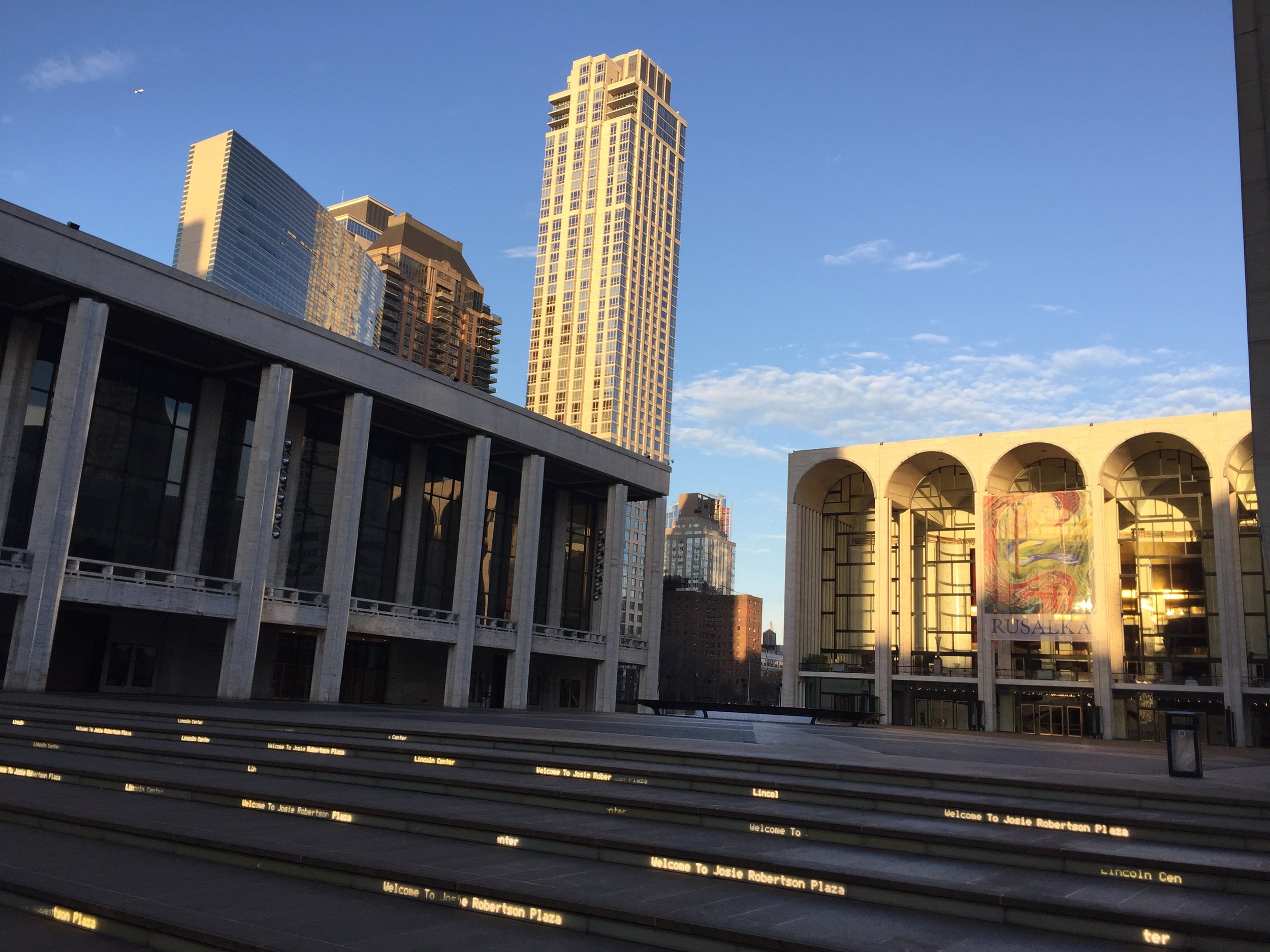
Lincoln Center Plaza
At Lincoln Center, the Metropolitan Opera, New York Philharmonic, New York City Ballet, Chamber Music Society, The Juilliard School, The David Rubenstein Atrium, and Lincoln Center Summer Stages put on an estimated 1500 performances per year for over 5 million visitors. Behind the scenes, before, during, and after these performances, a secret army of shadow workers—electricians, carpenters, security guards, porters, cleaners, custodians, maids, engineers, and painters—prepare, maintain, and clean up, often long after the last curtain call.
This dedicated group scours countless toilet bowls, replaces thousands of light bulbs, catches and disposes of stubborn pests, squeegees hundreds of panes of glass, makes snow magically disappear, keeps the Revson Fountain spouting like clockwork, and deters drunk students from diving into it. They remove the hair brushes that clog toilets in Juilliard dormitories, provide School of American Ballet students with air purifiers, repaint concert halls, replace hand sanitizers, disinfect doorknobs, and work overnight shifts and on public holidays to scrub and mop classrooms, dance studios, and restaurants, and handle all the unglamorous tasks that maintain the standard of excellence required of the world's leading performing arts center. These efforts are largely invisible to and unrecognized by the patrons focused on the stage, but their purpose is to provide those patrons with a splendid night of entertainment at world-class facilities.
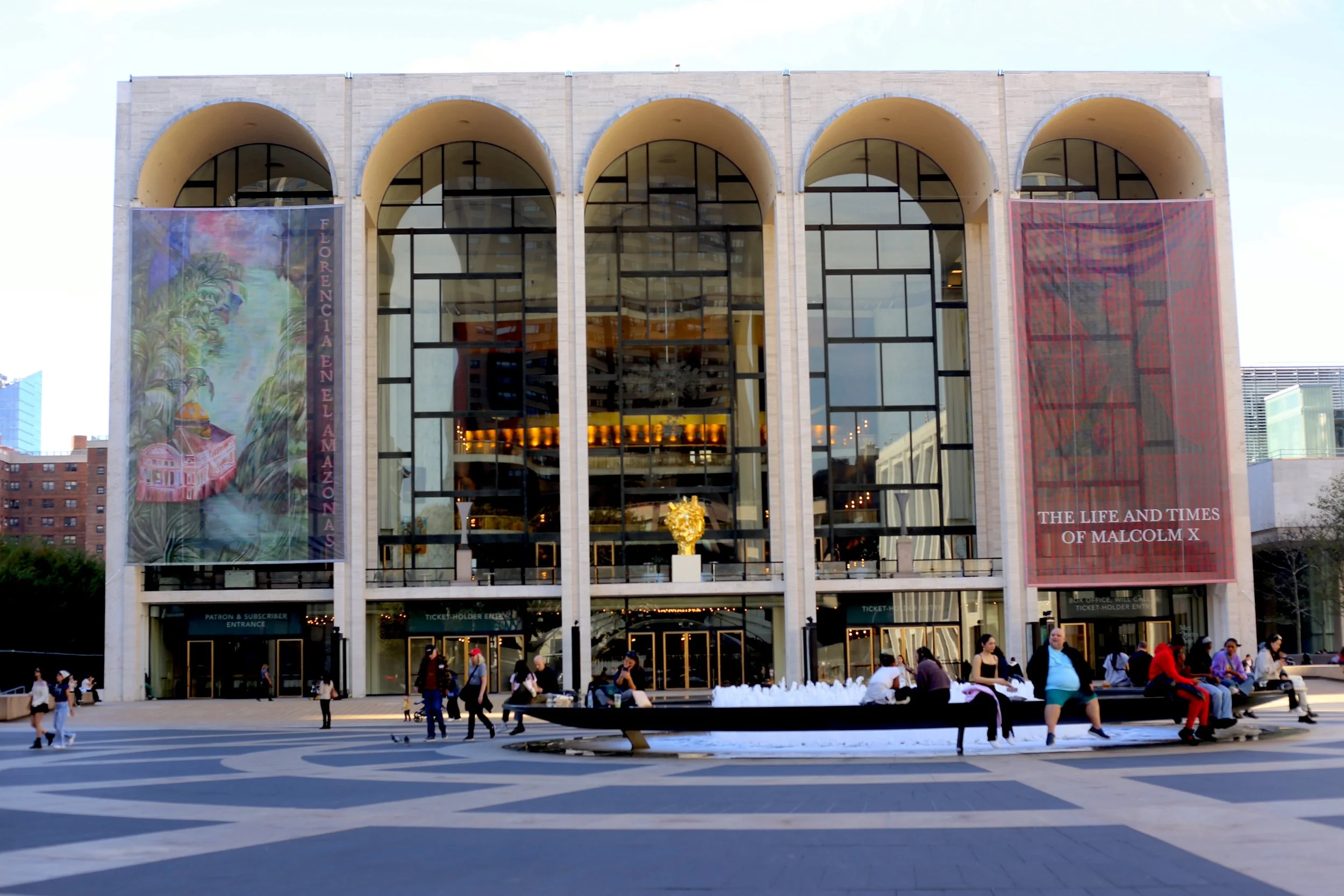
Revson Fountain and Metropolitan Opera
For some operations employees at Lincoln Center, this may be the only job they hold in the United States. Many are immigrants of color, adjusting to life in a new country where English is not their first language. Some of these dedicated individuals work multiple jobs to support their families. These anonymous workers have never stood in the spotlight, received a round of applause, caught a bouquet of flowers, or been asked for an autograph, yet after their shifts they return home with a sense of fulfillment, satisfied to have completed their tasks and eager to return the next day to do it all over again.
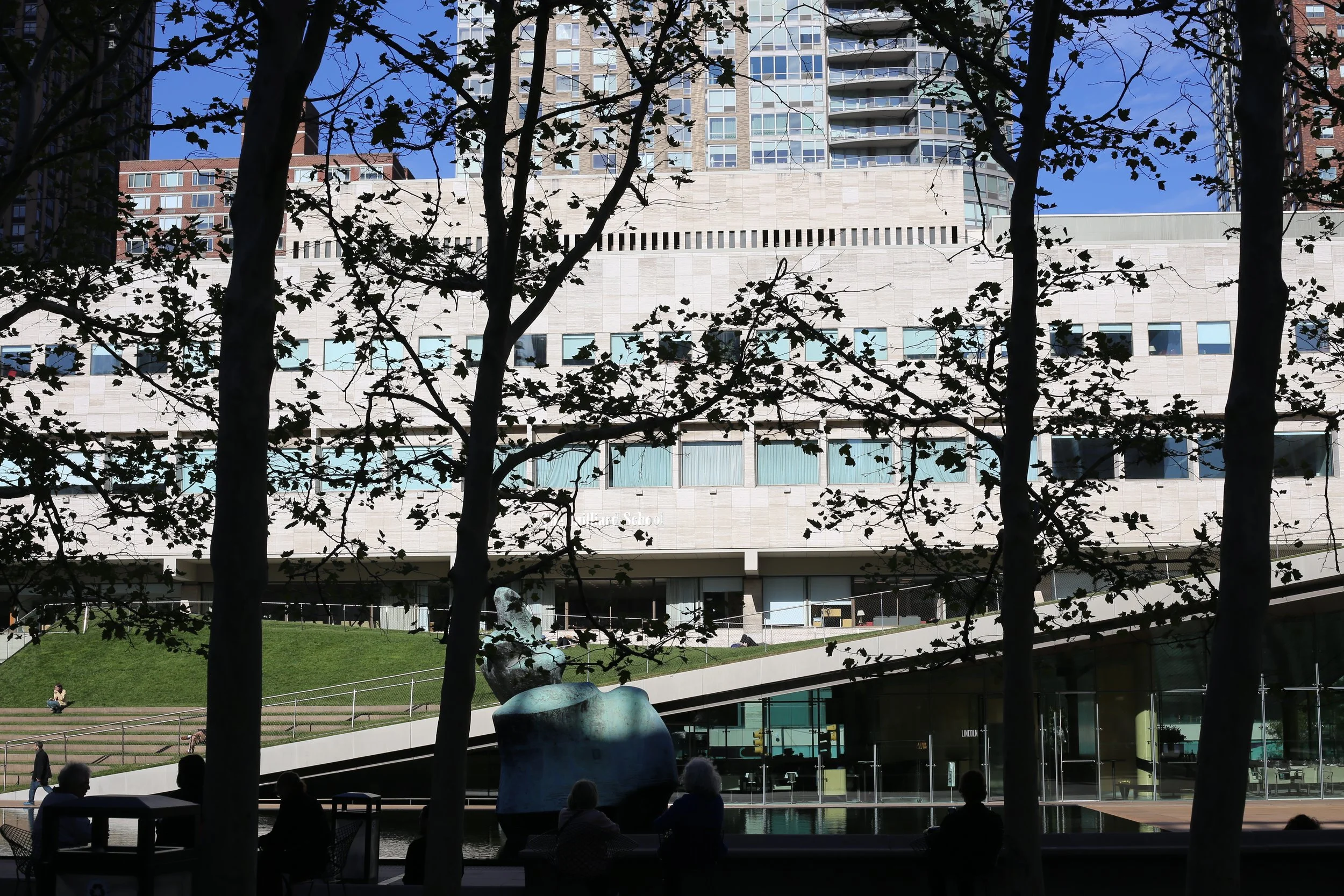
Paul Milstein Reflecting Pool and Henry Moore Reclining Figure
Their decades of unwavering commitment have forged personal legacies of exceptional service at Lincoln Center, an institution that embodies a welcoming community for those devoted to its mission. These silent pillars are the backbone of the performing arts, blending resilience with dignity as they ensure the Lincoln Center campus runs smoothly. They are often unseen but always essential.
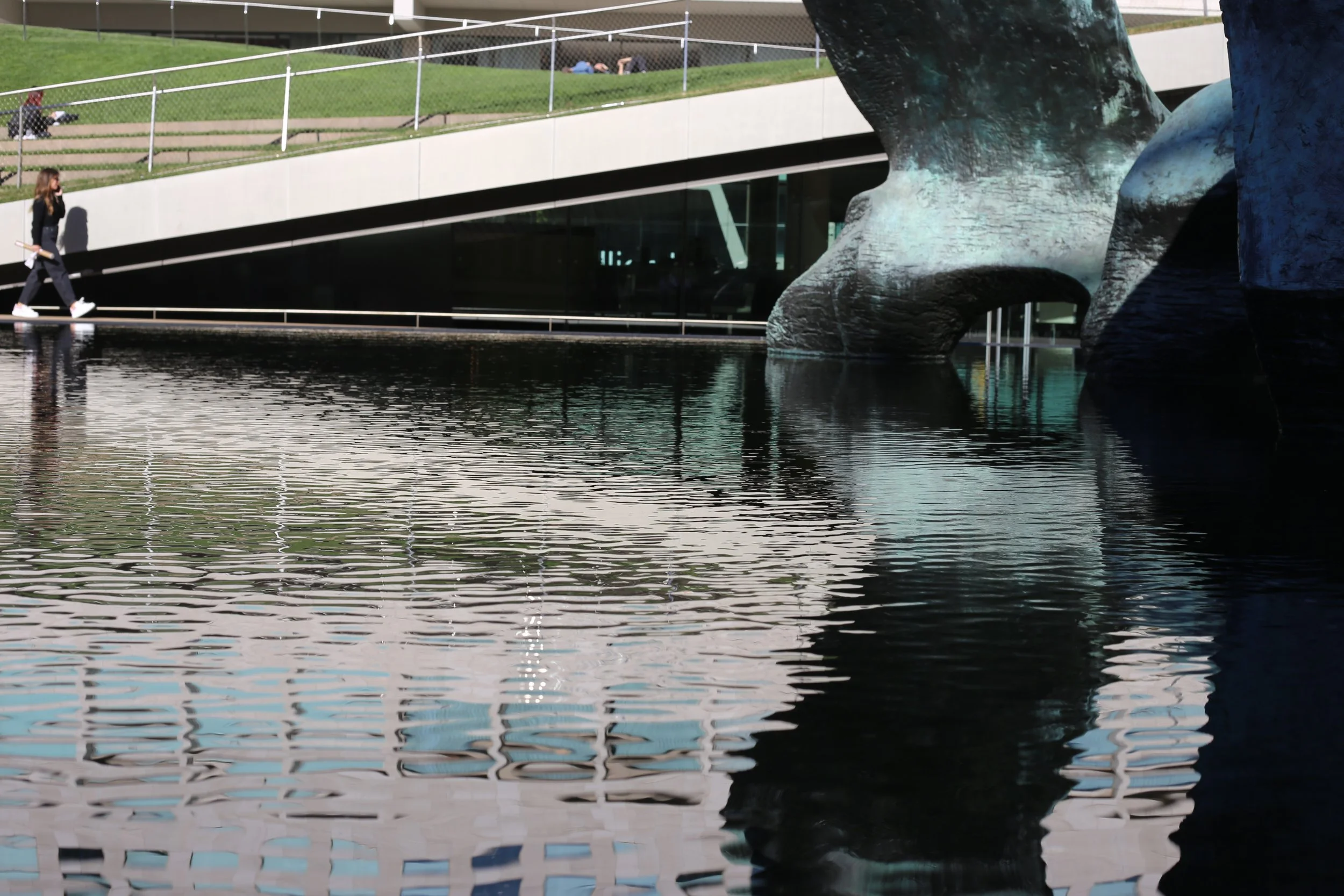
Detail of Henry Moore Reclining Figure