The Porters
“You want to take a picture with us?”
Lincoln Center porters operated across three shifts—morning, afternoon, and overnight—each overseen by a supervisor who managed the routines and implemented work orders in three key areas:
Concert Halls: David Geffen Hall, Alice Tully Hall, Lincoln Center Theater, Walter Reade Theater, David Rubenstein Atrium, and Elinor Bunin Munroe Film Center.
Rose Building: Seven floors of administrative offices and dance studios, four floors of dormitories for the School of American Ballet, and twelve floors of dormitories and residences for The Juilliard School.
Plaza: Damrosch Park, Josie Robertson Plaza, Barclays Grove, Hearst Plaza, Illumination Lawn, the block of 65th Street between Amsterdam and Broadway, Columbus Avenue between 62nd and 66th Streets, 66th Street South from Broadway to The Juilliard School, and five underground parking garages coded by color—red, green, yellow, black, and blue.
In these areas, porters set up and struck outdoor seating, emptied garbage cans, buffed poster cases, operated ride-on sweepers, cleaned and polished offices, lounges, and kitchens, vacuumed and shampooed theaters, polished lobby terrazzo, scrubbed and disinfected bathrooms, handled load-ins and load-outs for special events, and donned black attire to fade into the background while servicing VIP premieres.
The most dreaded task? Fixing a clogged toilet that had become a health hazard. Engineers and plumbers tackled the dirty work, while front-of-house staff held their noses and stood a safe distance away, anxiously watching the clock. Once the clog was cleared, porters armed with buckets, wet vacuums, disinfectant, and air freshener swooped in to clean up the aftermath.
Porters were often called upon for emergency tasks, usually requested at the last minute by panicked constituents who’d overlooked something crucial for an event. Their expectation? That the operations team would drop everything to accommodate their request. As one of my colleagues often said, “Your emergency is not my emergency,” a mantra he frequently cited during tense phone calls. When emergencies did arise, our teams were already knee-deep in scheduled tasks but we always did our best to meet the constituents' needs, skillfully maneuvering the teams to assist. The porters and trades understood the importance of last-minute requests, and their ability to adapt and overcome these challenges only increased their value.
Group Picture
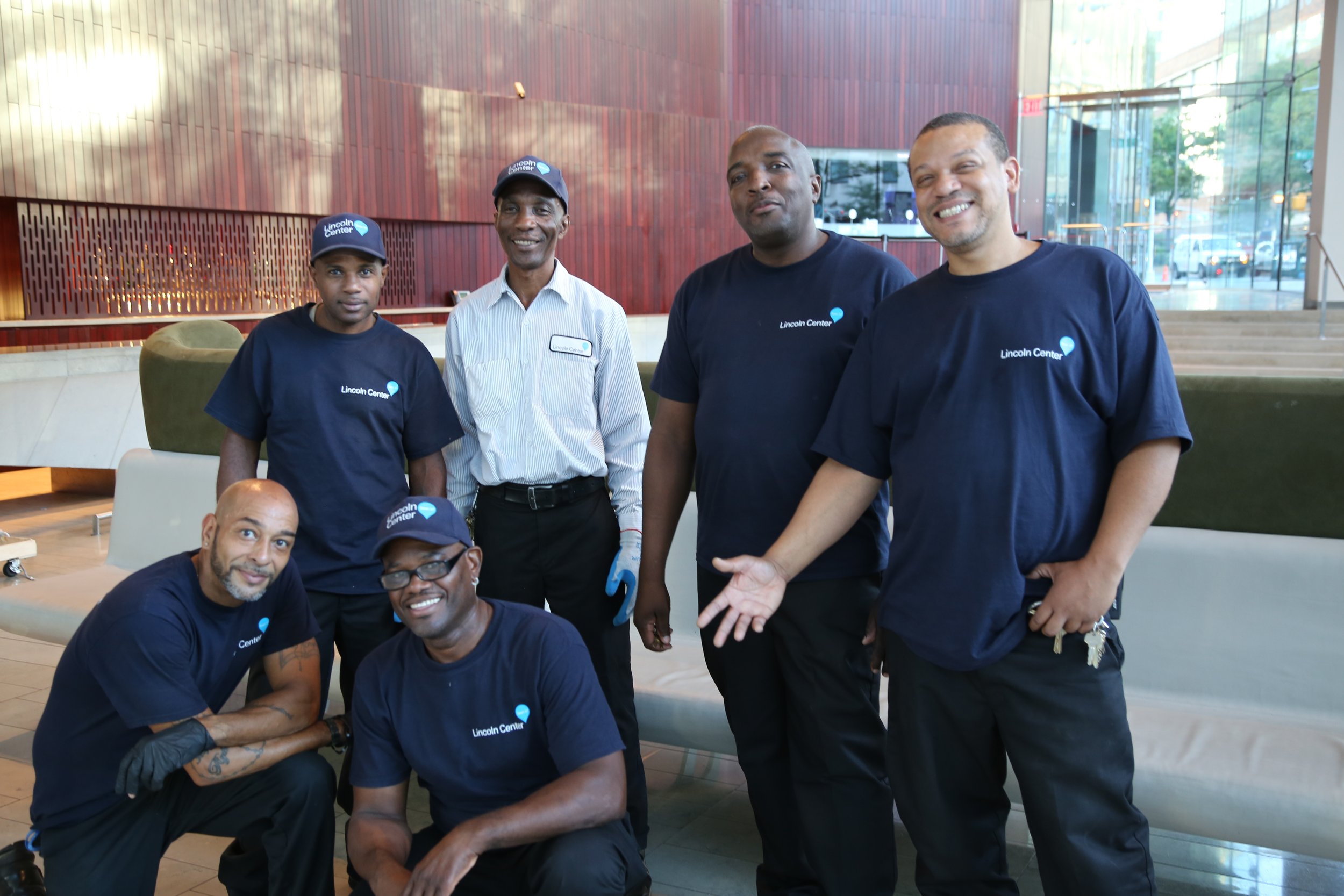
One morning, I strolled into Alice Tully Hall to find the crew in the midst of a large furniture move. I spotted Louis, the supervisor, orchestrating the scene like a maestro guiding his symphony. I was in the habit of taking my camera with me around campus so an idea struck me: I wanted to capture this moment, this team, in a photograph.
“Louis,” I called out, “how about we take a group picture?”
He turned to me with concern. Taking a picture of mere porters was not an everyday occurrence. He pulled me aside, his voice tinged with worry.
“Excuse me, Mister Roger. I’m confused. You want to take a picture with us? What is this for?”
I could see the uncertainty in his eyes, as if he feared some kind of official compliance was at play. I quickly reassured him, explaining that I wanted to document the lives and contributions of Lincoln Center’s operations employees. My goal was to one day share the stories of these hidden champions, the people who keep the heart of Lincoln Center beating.
As I spoke, Louis’s expression softened, his concern melted away and a smile broke across his face. He loved the idea. Turning to the team, he explained my intentions with the enthusiasm of a man who had just discovered he was being celebrated. At first, there was a ripple of confusion among the crew, but it didn’t take long for delight to spread. Their faces lit up, and the team quickly arranged themselves for the photo.
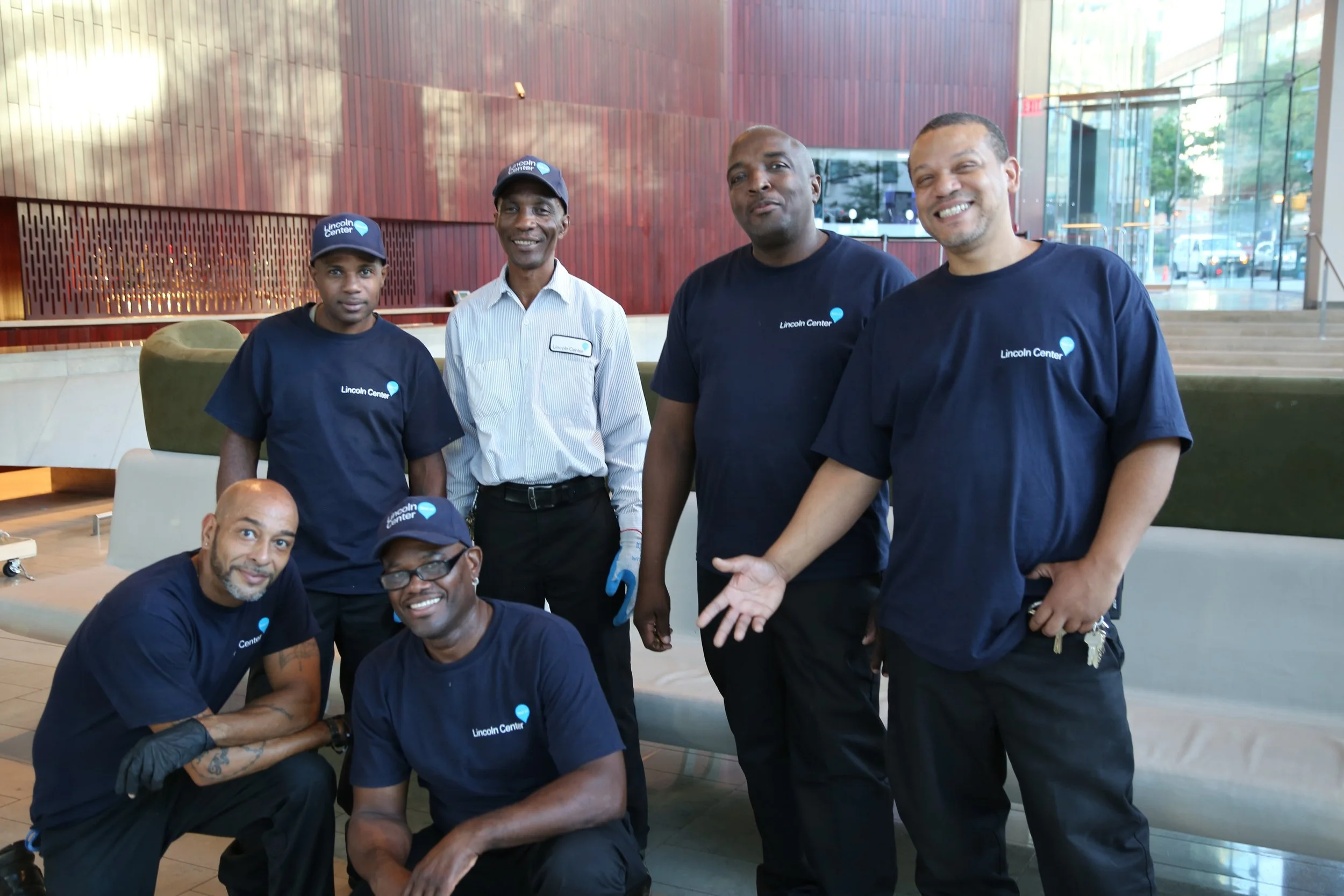
Left to Right - Mike, Mattis, Derek, Mister Whyne, Warlters and Louis.
I treasure this picture. It’s not just a photo; it’s a portrait of genuine joy, positivity, and character. Each person in the frame exudes a natural unity and pride. Alice Tully Hall’s lobby is a befitting frame for Louis’s wide smile and his outstretched hand, as if he’s inviting us all to acknowledge the true stars of this show—the first chair and principal sections of his own remarkable ensemble.
Mike (kneeling far left)
Mike was sharp, self-assured, and serious—a dependable worker. I met him during an office upgrade in David Geffen Hall, when we needed extra help to move some furniture. From the moment we shook hands, he maintained great eye contact, radiating an energy that clearly said, "You can count on me." And he delivered on that promise every time I needed him. If there were ever a special forces team of porters deployed during an apocalyptic snowstorm, Mike would be the lone survivor.
Mattis (standing top left) and Derek (kneeling right of Mike)
Mattis and Derek worked in the Concert Halls, embodying the qualities of diligent employees who listened and smiled but remained reticent, background players whenever I spoke with their supervisors. They exemplified the honorable yet cautious approach to their work—doing what was required without drawing attention to themselves.
In this picture, however, Mattis and Derek show their true characters.
Mister Whyne
Mister Whyne, the slim man in the white-striped shirt, was a quiet and cordial gentleman who worked in the Concert Halls. He carried himself with the gentle grace and uncommon poise of an English butler—always standing straight and speaking with a soft Jamaican accent. To management, Mister Whyne was as reliable as a Swiss watch. I knew that if I asked him to do anything, it wouldn’t just get done; it would be done properly.
When I joined the operations team in 2013, I noticed he was the only porter everyone called "Mister." Curious, I asked a colleague why. He simply shrugged and said:
“No idea, but when you look at Mister Whyne, he just looks like a Mister, right?”
Louis (far right) was the day crew supervisor in the halls. Charismatic and well-liked, Louis could brighten anyone's day. His popularity was clear when he was voted one of the most helpful and conscientious workers by his peers, earning an award and a hefty check. The cheers that filled the room as he accepted the honor were evidence of this high regard.
Louis’s smile radiated fun, friendship, and warmth. On tough days, if Louis showed up at your desk to help remove boxes or a stray chair, his presence wasn’t just a task completed—it was a welcome break, leaving you feeling lighter and at ease.
Walters (left of Louis) co-supervised the Hall’s crew with Louis. With a strong Jamaican accent and commanding presence, Walters was like an irksome grandparent—tough yet endearing—who held sway over the Lincoln Center West Indian community. Though demanding, he was always genial and polite. The dynamic between Walters and Louis was fascinating—they bickered like an old married couple but remained inseparable. No matter the day's disagreements, they were always side by side, even after hours.
Robin
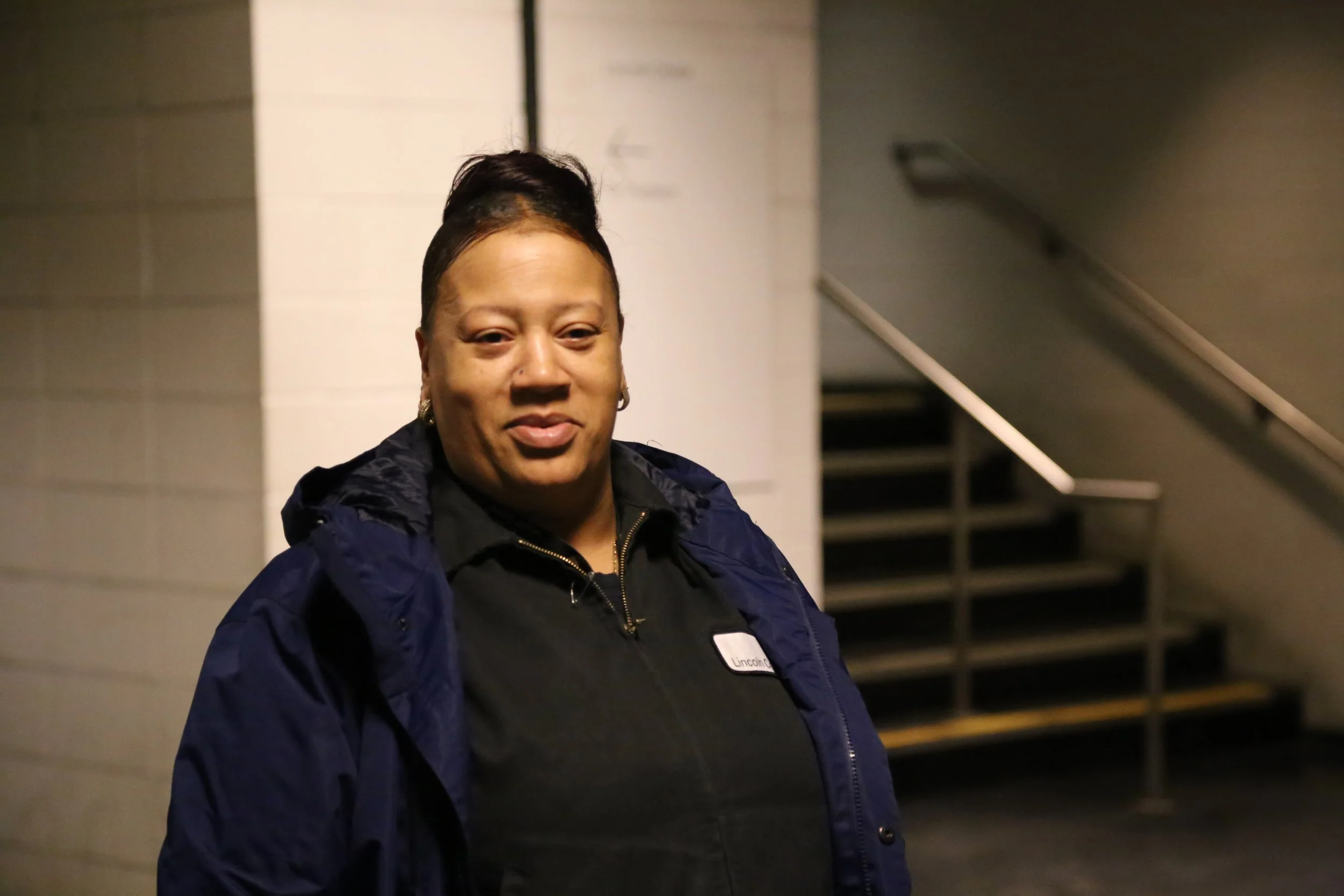
Robin, one of the only female plaza porters, hailed from the Bronx and commanded a strong presence. Her Bronx accent was as bold as her personality, laced with the colorful intonation that came from growing up in the projects. At first, I was a bit wary of her, unsure of what to make of her tough exterior. But that all changed when I saw her greet my boss with a soft kiss on the cheek before giving me a friendly wave. It was then that I realized Robin hid a soft side under that formidable exterior.
Robin's toughness was no myth. One night, when a disturbed man attacked a security guard in the underground concourse, Robin sprang into action. With an umbrella in hand, she wielded it like a nunchuck and chased off the attacker, leaving no doubt about her fearless spirit.