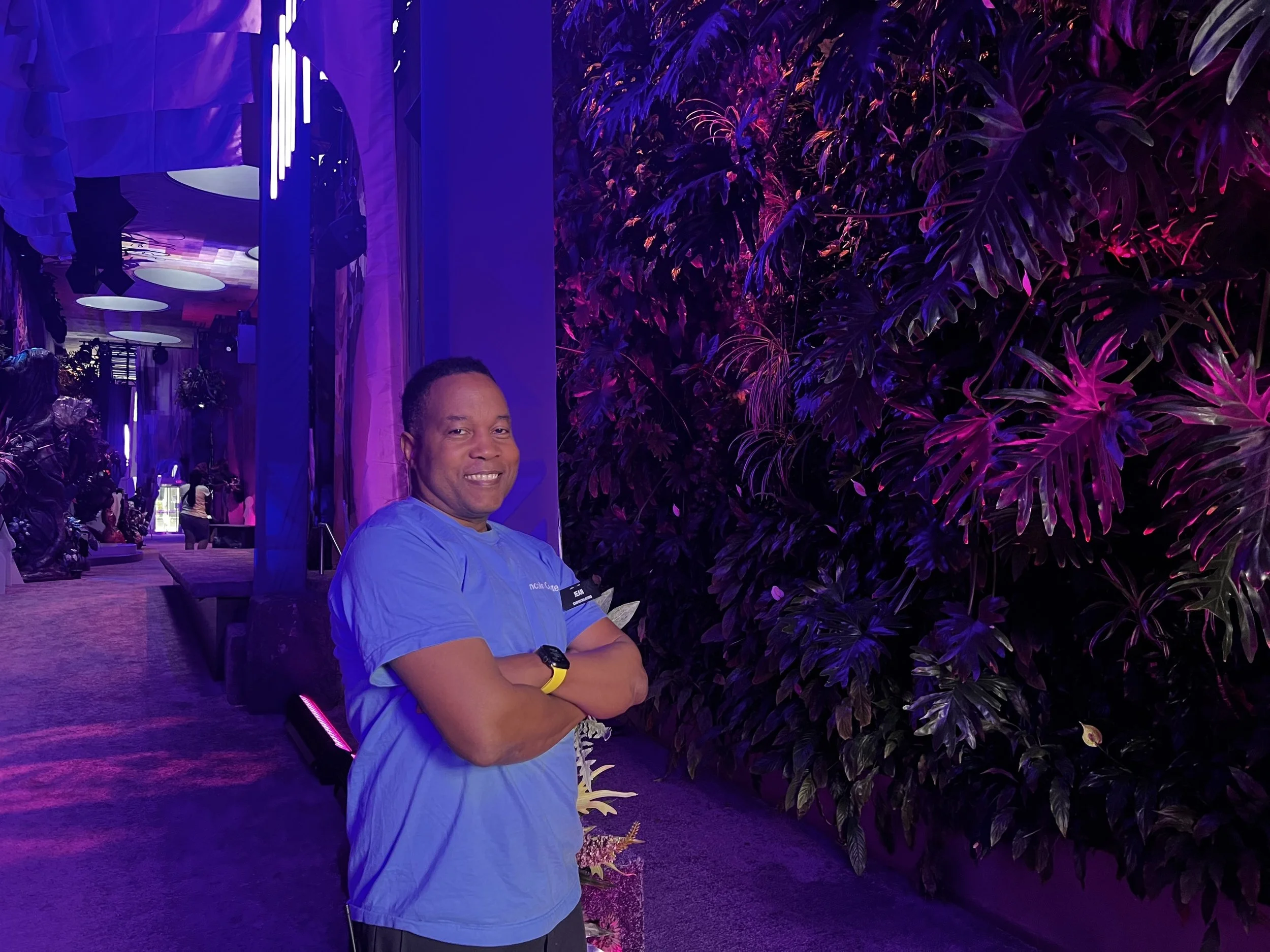
Jean & Leo
"You should have swapped queens, you’re going to lose this game."
Jean was the porter at the David Rubenstein Atrium and the first person I met at Lincoln Center when I started my journey there in 2010. By then, he had already dedicated fourteen years to the Atrium, following four years in the parking garage beneath Josie Robertson Plaza. With his deep knowledge of the campus, Jean quickly became my personal encyclopedia.
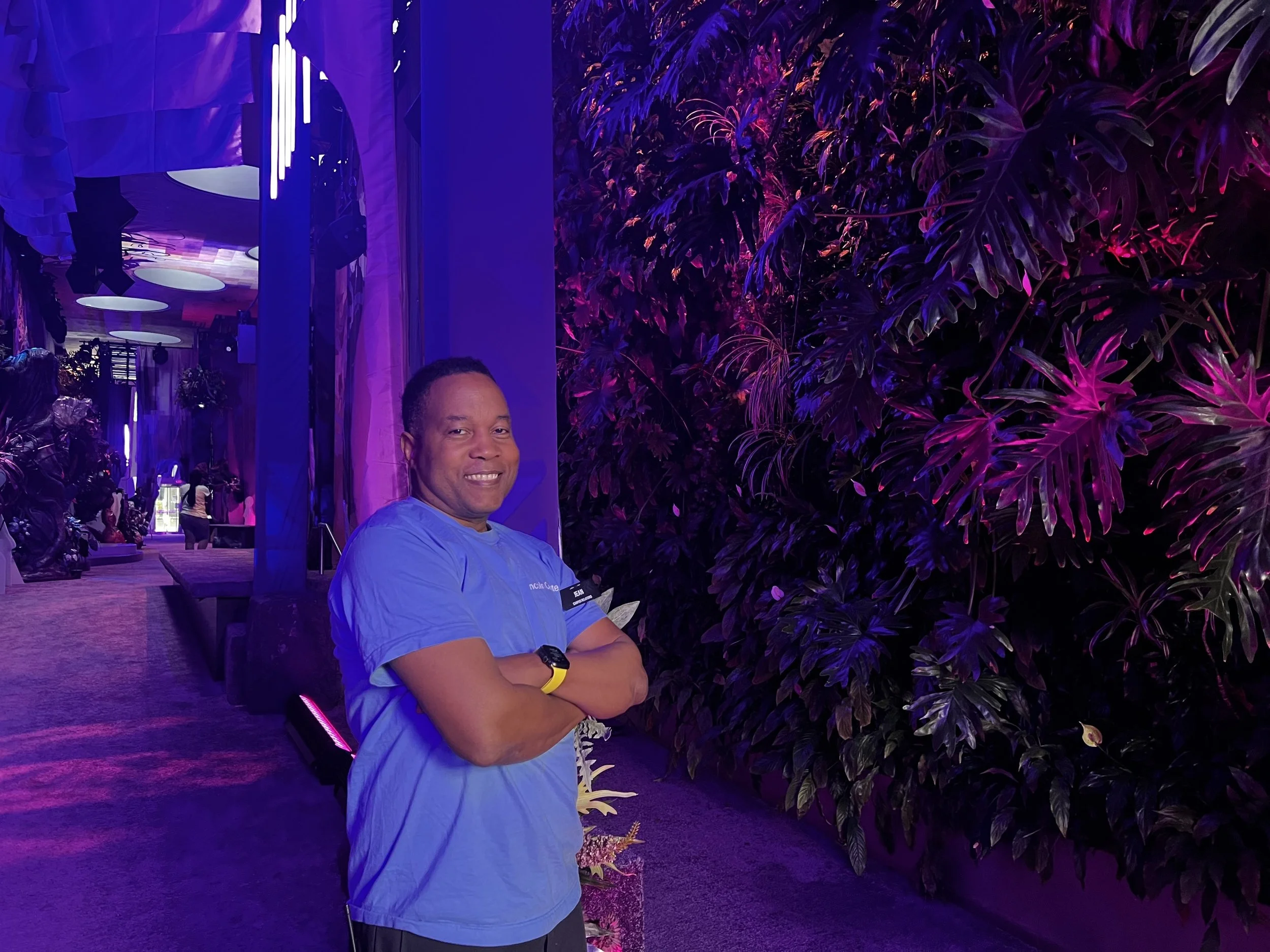
‘Jeano’
Born in Haiti, Jean was an enthusiastic fan of Brazilian football and reminisced about playing on the weekends with the local Haitians in Long Island (until their games got too competitive). He was popular among staff, known for running the American football sweepstakes each season. On Fridays, breathless colleagues often sought him out to settle dues for the weekly pot.
One day, while engrossed in a game of chess on my phone, Jean approached, looking surprised.
"Do you play?" I asked.
"Of course," he replied with a grin.
His peers affectionately called him "Jean with the big brain," and he lived up to the title. Jean often helped me with intricate event planning at the Atrium, and after accepting his chess challenge, he developed a habit of wandering over while we were mid-game to casually point out:
"You should have swapped queens, you’re going to lose this game."
And every time he made a prediction, he was right.
Jean spoke with a gentle Haitian accent, pronouncing Rs as Ws—my name, Roger, became Wudger. His keen sense of humor often peeked through in a chuckle that escaped when something amused him. He drove to work from Long Island daily and was almost always on time. He projected an unmistakable contentment with his role as the Atrium porter—something I envied as I struggled to settle into one role. I believe Jean will remain at Lincoln Center until retirement.
When I shared my project with him, he nodded his approval.
Security Officer Leo Distefano
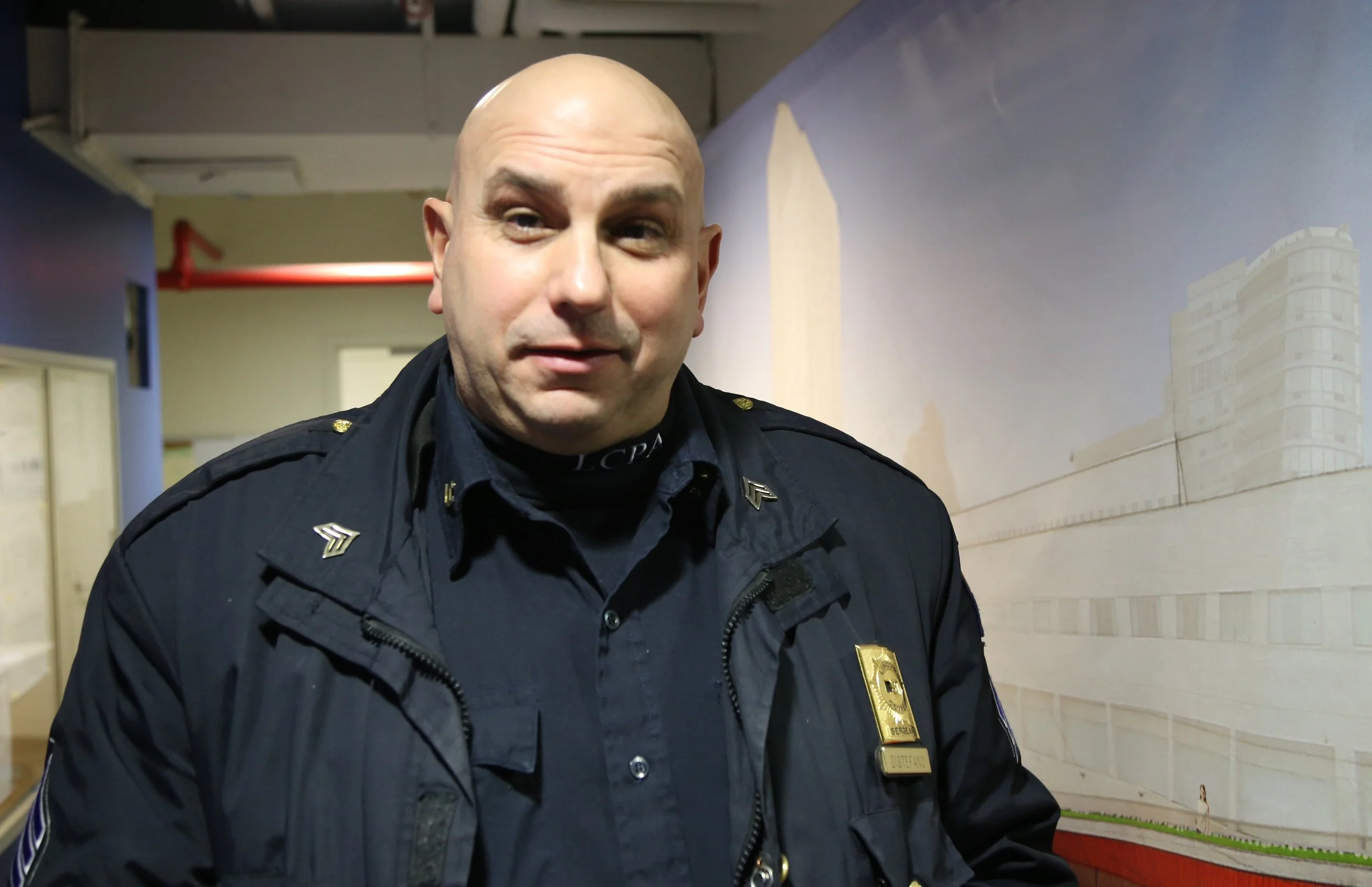
Leo
I met Leo while working on the Visitor Services desk at the David Rubenstein Atrium in August 2010. He sat behind me monitoring security. He was a very large man who didn't speak at all for the first few days. I didn’t realize that he was a shy gentle giant with a slight stutter until I asked him what he had for breakfast one morning.
“For…for…breakfast?” He repeated. I nodded.
“For breakfast? I had a…a oatmeal and a…a coffee.”
He spoke with a Bowery boy accent, deep and melodic. There was an innocence to his response and he maintained an expression that was on the verge of smiling or waiting to be surprised whenever we spoke.
Leo repeated any word or question that I put to him, like he’d heard them for the first time. When he realized that I was from England he asked about the Queen. With a glint in my eye, I told him that she liked bacon for breakfast and loved Corgis.
“Corgis?”
“Yes, she owns lots of Corgis.”
“Corgis?”
“Yes.”
“What the hell is a Corgi?”
After we stopped laughing, I showed him an online image of the Queen with her Corgis and told him that she was very fond of them.
We became pals and spent our downtime discussing kale (he caught me eating a kale salad one day), and life in England. After seeing a trailer for the film Despicable Me, I told Leo that he reminded me of Gru from the movie. Before I left the Atrium to work across the street at the main Lincoln Center campus, I printed a picture of the Queen and her Corgis alongside Gru. I gave it to Leo and said: “Whenever you look at this picture you will think of me.”
After that, anytime I saw him on campus our conversations went something like this:
“Heyyyy Rahhhdge! You still eating kale?”
“Yep Leo, I’m still eating kale.”
“How’s the…the Queen?”
“She’s great, she sends her love.”
“How’s those Cor…Cor…Corgis?”
“They send their love too!”
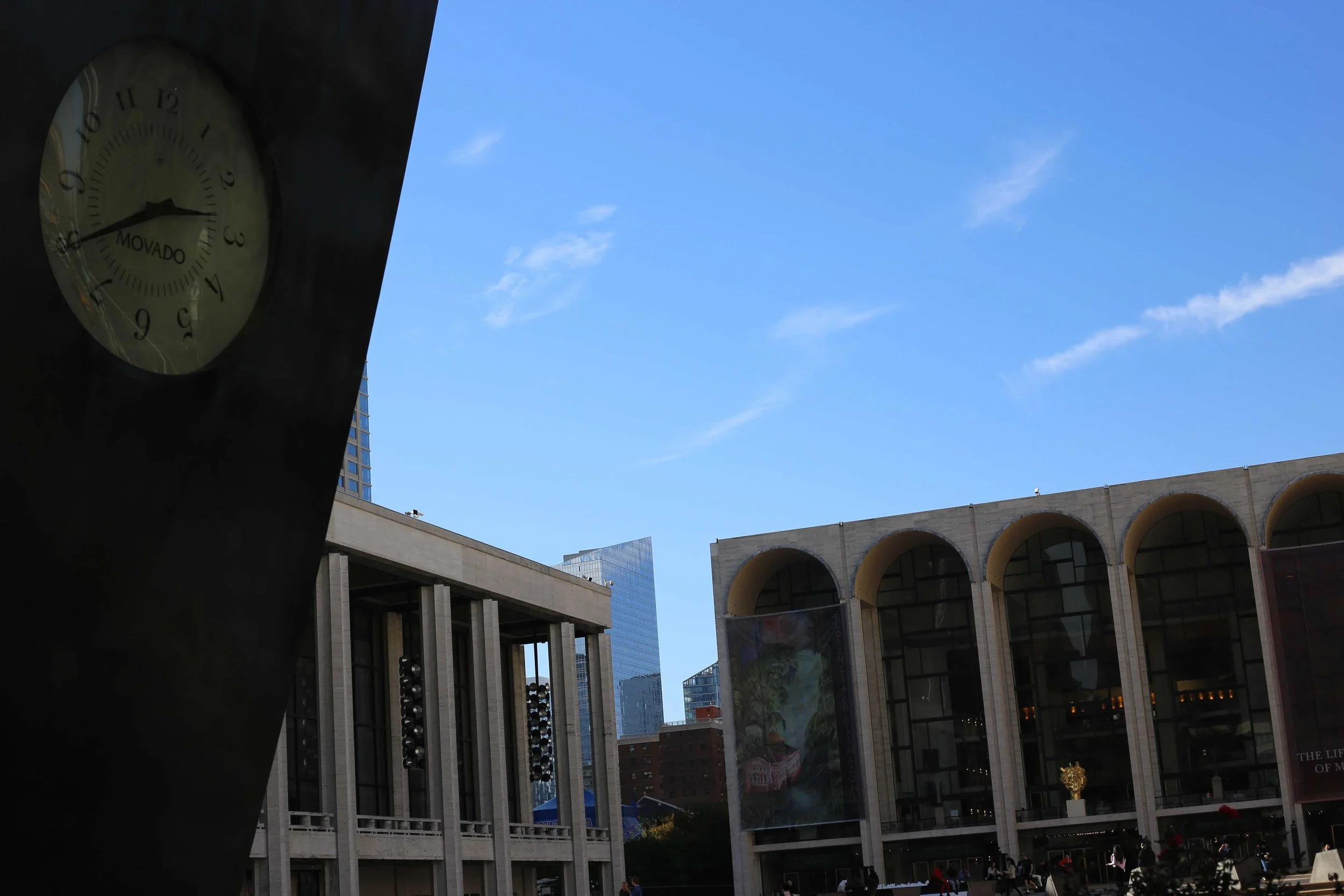
On the Clock at Lincoln Center
“These anonymous workers have never stood in the spotlight, received a round of applause, caught a bouquet of flowers…”
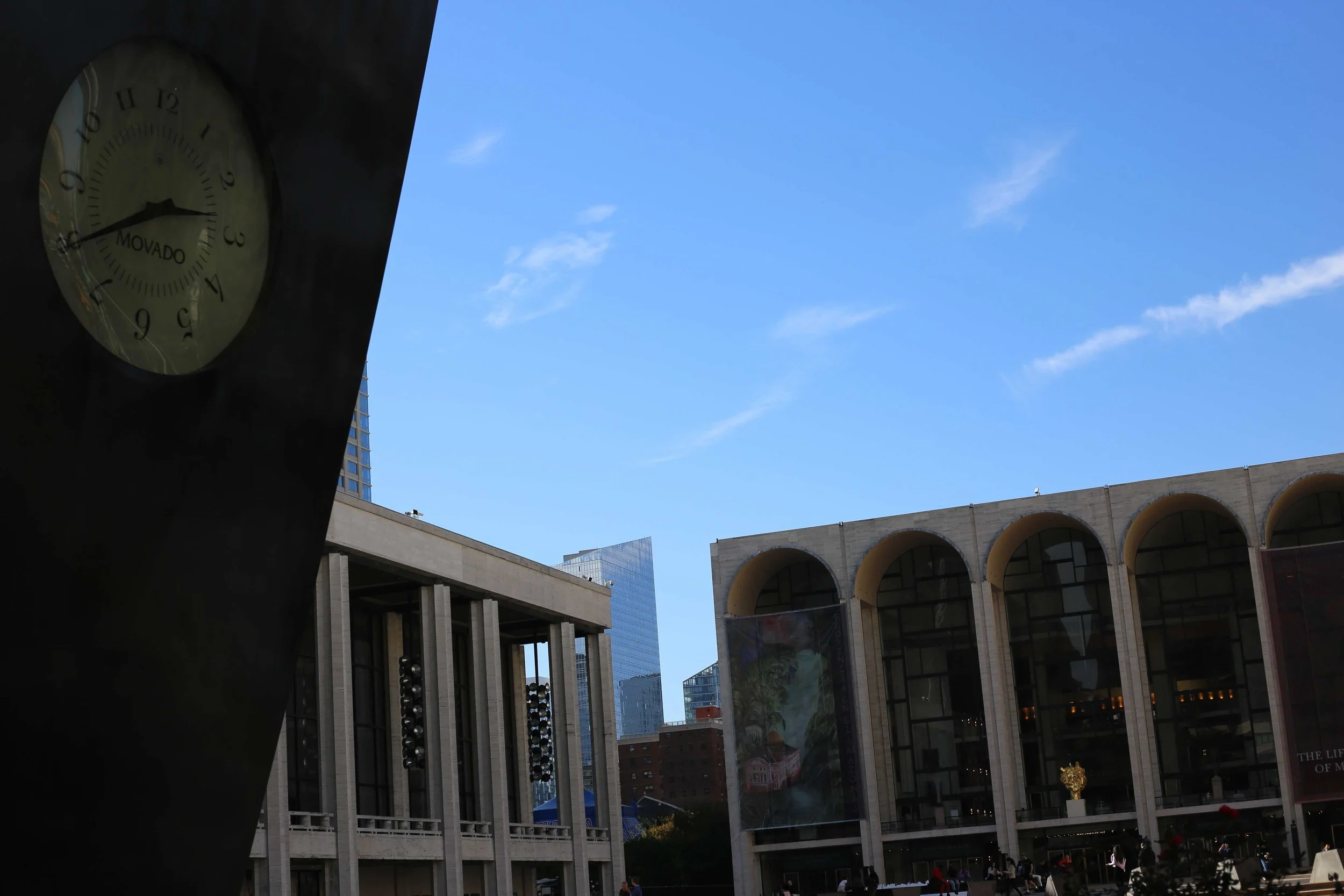
Movado Clock, Lincoln Center
This blog is a selection of my photos, anecdotes, and character sketches that portray some of the dedicated employees I was privileged to work with from 2010-2019.
As a manager, filmmaker, and storyteller, I felt it was my duty to document and dignify some of the people I came to know, their jobs, and their unique lives - On the Clock at Lincoln Center.
My Road to Lincoln Center
In May 2000, I left my home in London for a new home in New York City, driven by a dream to make a feature film that would launch my career as a writer and director. Drawn to stories of underdogs and unsung heroes, I wanted to be the voice of the unheard.
By July 2010, after working on countless independent films, I needed a job to cover my rent while fundraising for a feature film that I would direct. Lincoln Center suddenly came to mind, and on a whim, I checked their job openings. I found a position that seemed perfect: Facility Assistant/Visitor’s Service Representative, 20 hours a week. I applied on a Monday and to my surprise received a call the very next day—Lincoln Center wanted to interview me.
In August 2010, I began working at Lincoln Center for the Performing Arts. What started as a part-time job quickly evolved. Over the next nine years, I moved through various roles: Facility Manager, Senior Manager of Operations & Facility Services, and Assistant Director of Operations & Facilities. By December 2019, I became the Director of Facilities, Operations at The Juilliard School, a premier performing arts academy and a Lincoln Center constituent.
During my fourteen years at Lincoln Center’s 16-acre campus, I forged meaningful friendships, cultivated relationships, and developed a love for the community, especially within the facilities and operations teams.
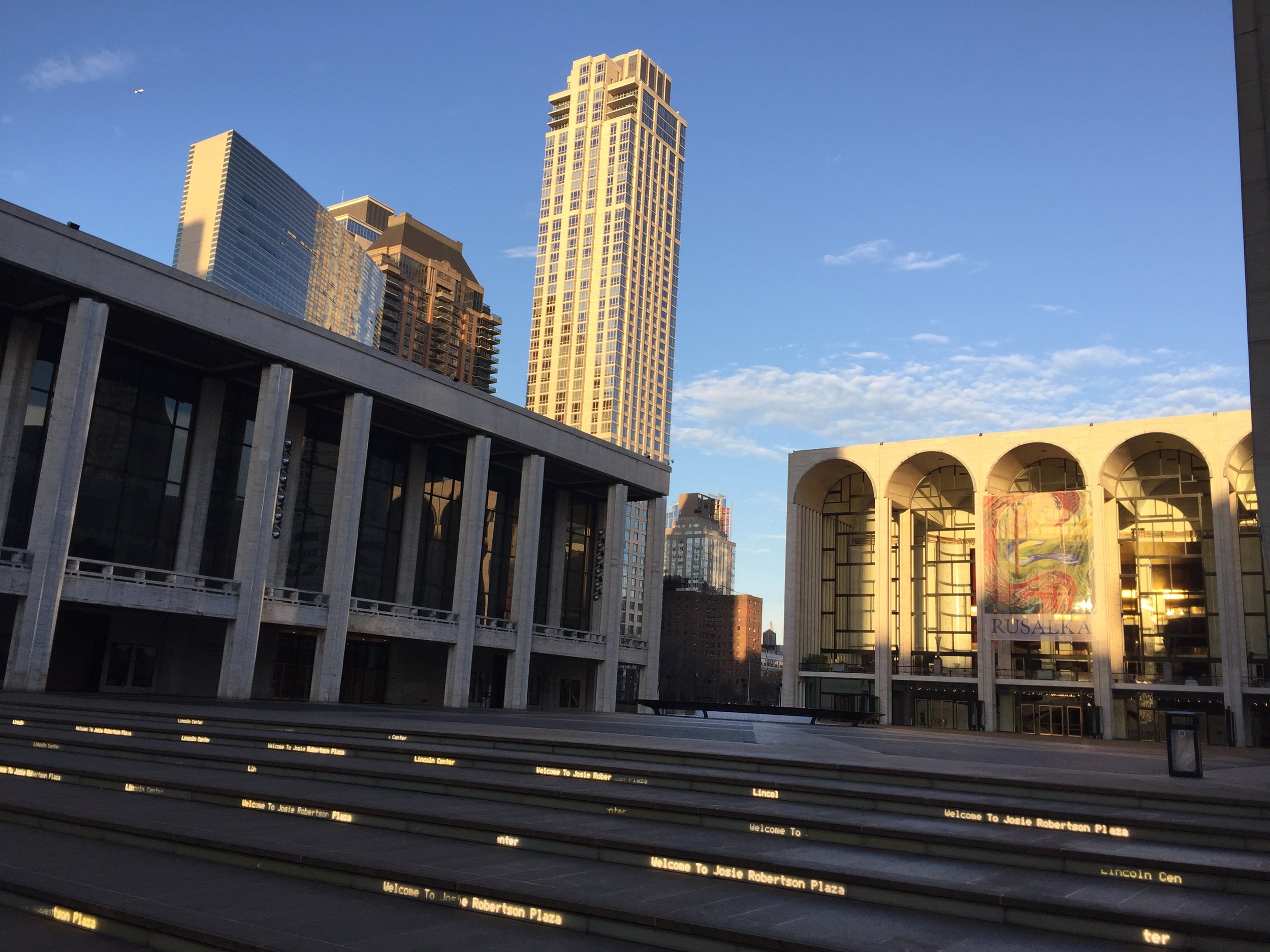
Lincoln Center Plaza
At Lincoln Center, the Metropolitan Opera, New York Philharmonic, New York City Ballet, Chamber Music Society, The Juilliard School, The David Rubenstein Atrium, and Lincoln Center Summer Stages put on an estimated 1500 performances per year for over 5 million visitors. Behind the scenes, before, during, and after these performances, a secret army of shadow workers—electricians, carpenters, security guards, porters, cleaners, custodians, maids, engineers, and painters—prepare, maintain, and clean up, often long after the last curtain call.
This dedicated group scours countless toilet bowls, replaces thousands of light bulbs, catches and disposes of stubborn pests, squeegees hundreds of panes of glass, makes snow magically disappear, keeps the Revson Fountain spouting like clockwork, and deters drunk students from diving into it. They remove the hair brushes that clog toilets in Juilliard dormitories, provide School of American Ballet students with air purifiers, repaint concert halls, replace hand sanitizers, disinfect doorknobs, and work overnight shifts and on public holidays to scrub and mop classrooms, dance studios, and restaurants, and handle all the unglamorous tasks that maintain the standard of excellence required of the world's leading performing arts center. These efforts are largely invisible to and unrecognized by the patrons focused on the stage, but their purpose is to provide those patrons with a splendid night of entertainment at world-class facilities.
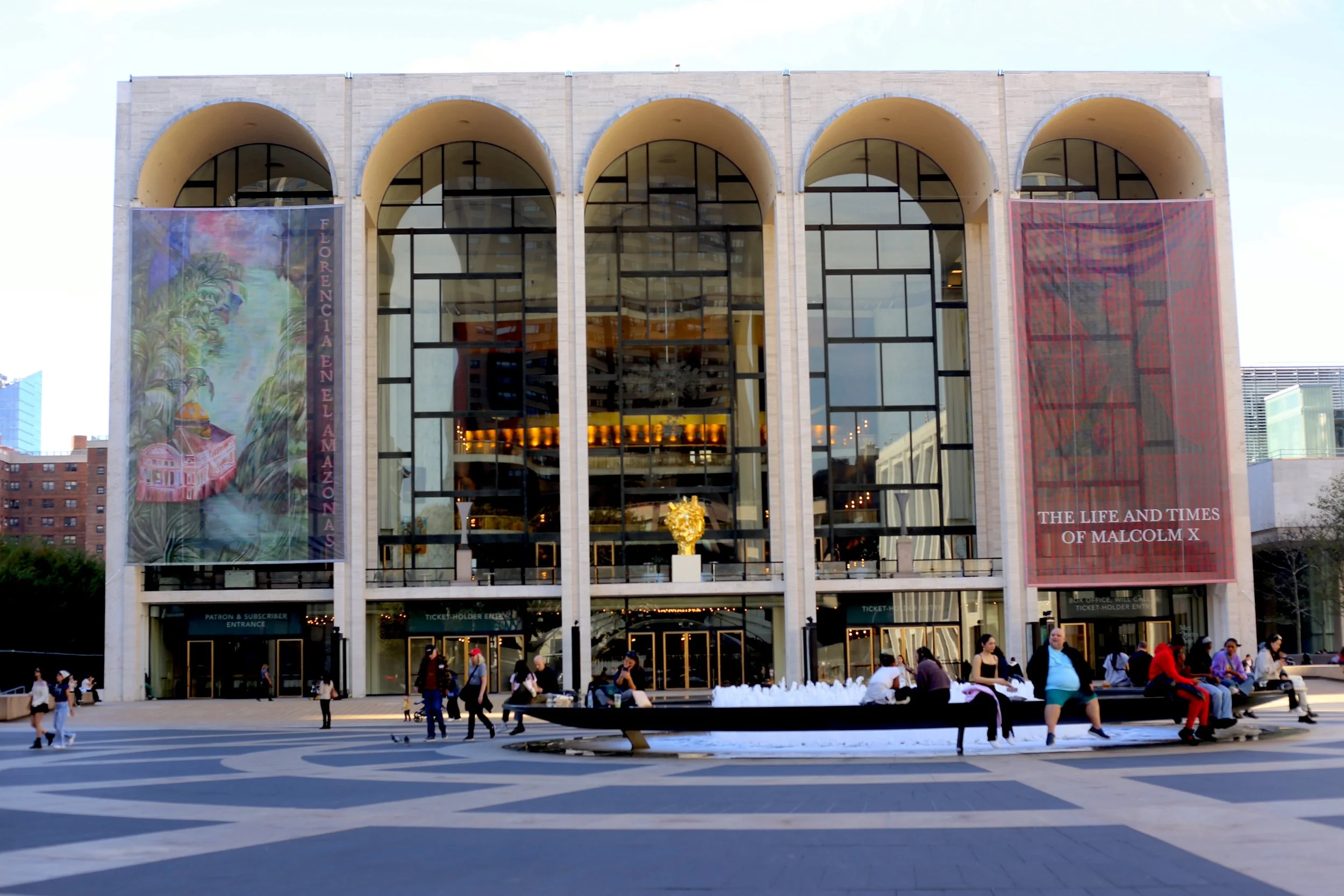
Revson Fountain and Metropolitan Opera
For some operations employees at Lincoln Center, this may be the only job they hold in the United States. Many are immigrants of color, adjusting to life in a new country where English is not their first language. Some of these dedicated individuals work multiple jobs to support their families. These anonymous workers have never stood in the spotlight, received a round of applause, caught a bouquet of flowers, or been asked for an autograph, yet after their shifts they return home with a sense of fulfillment, satisfied to have completed their tasks and eager to return the next day to do it all over again.
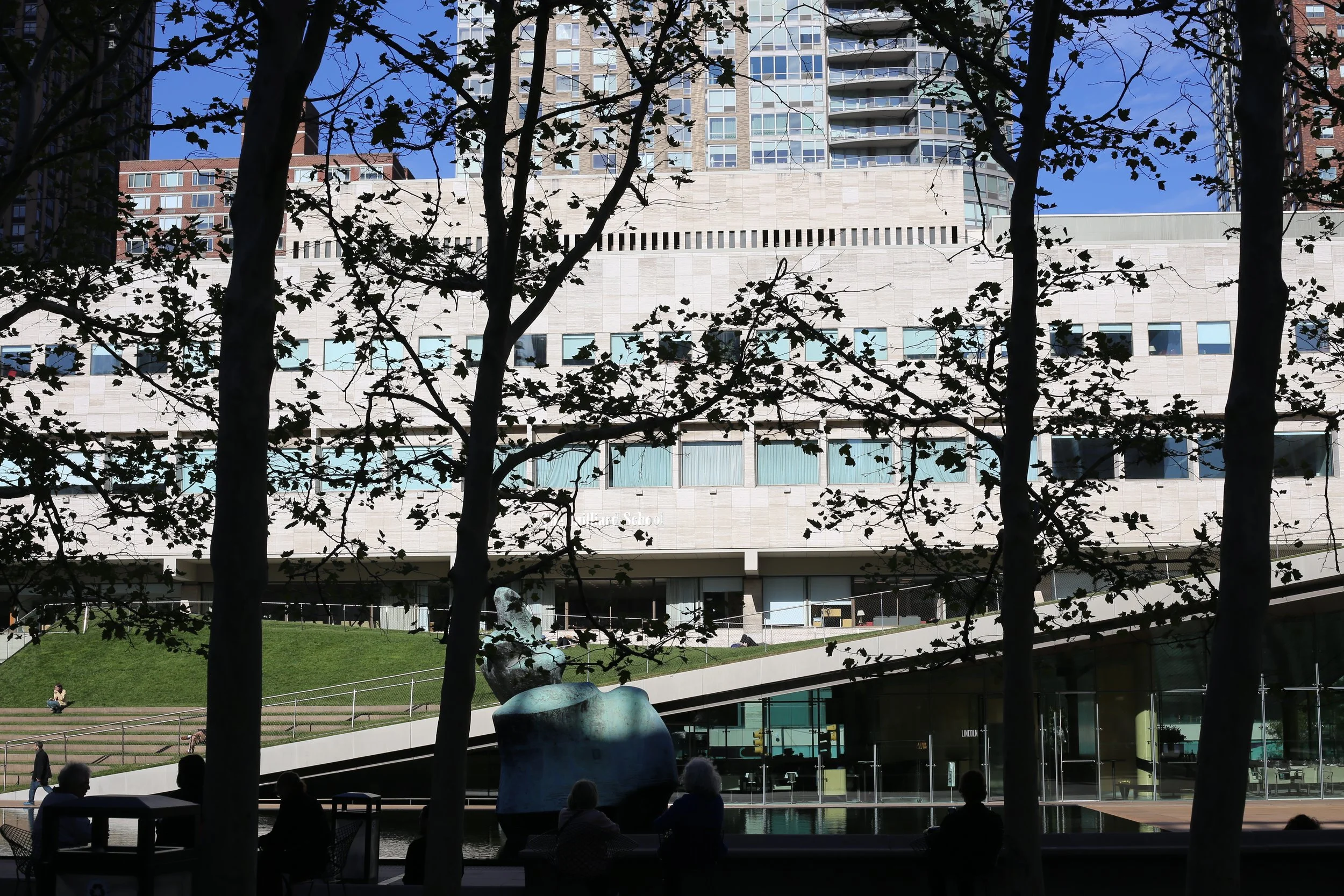
Paul Milstein Reflecting Pool and Henry Moore Reclining Figure
Their decades of unwavering commitment have forged personal legacies of exceptional service at Lincoln Center, an institution that embodies a welcoming community for those devoted to its mission. These silent pillars are the backbone of the performing arts, blending resilience with dignity as they ensure the Lincoln Center campus runs smoothly. They are often unseen but always essential.
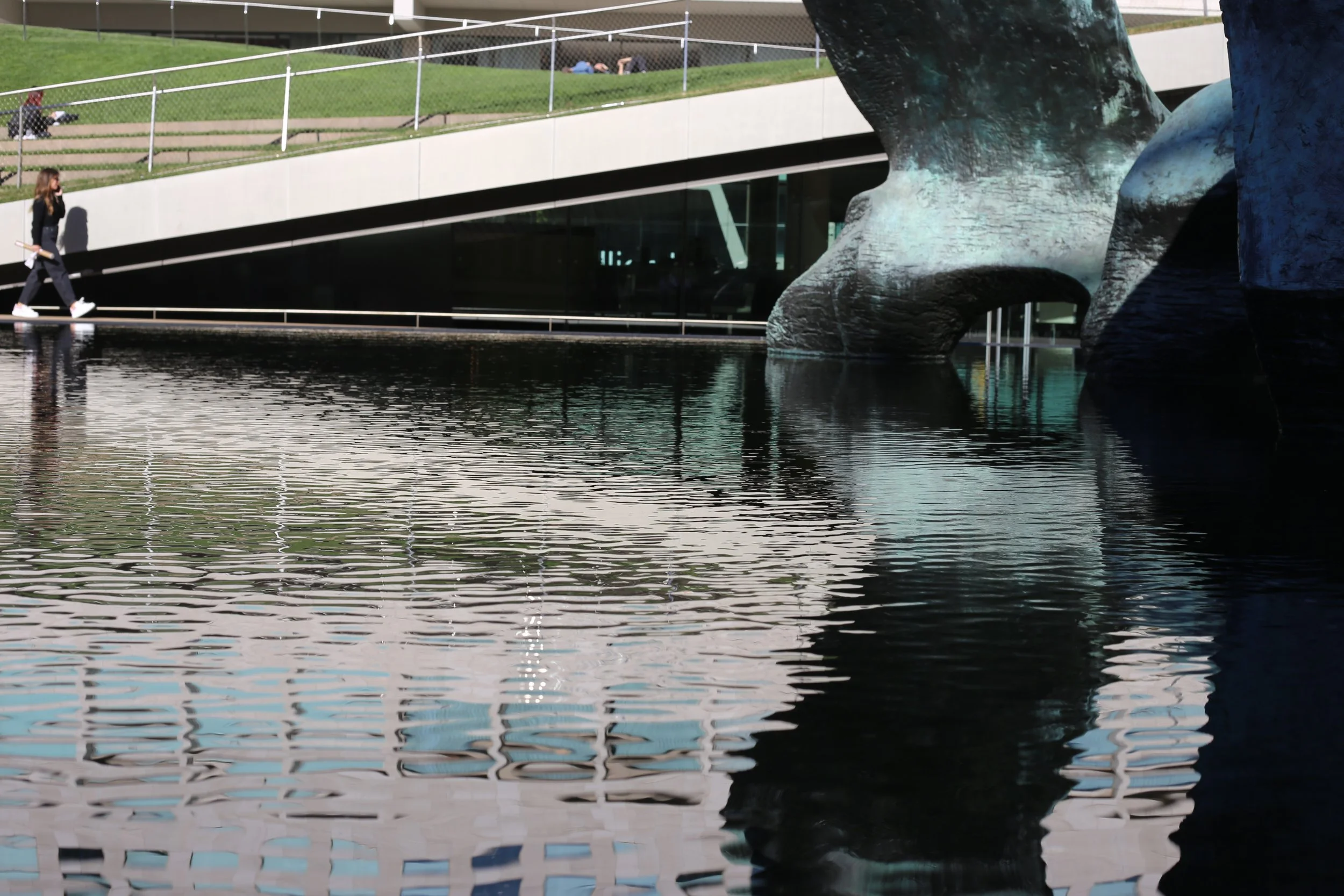
Detail of Henry Moore Reclining Figure